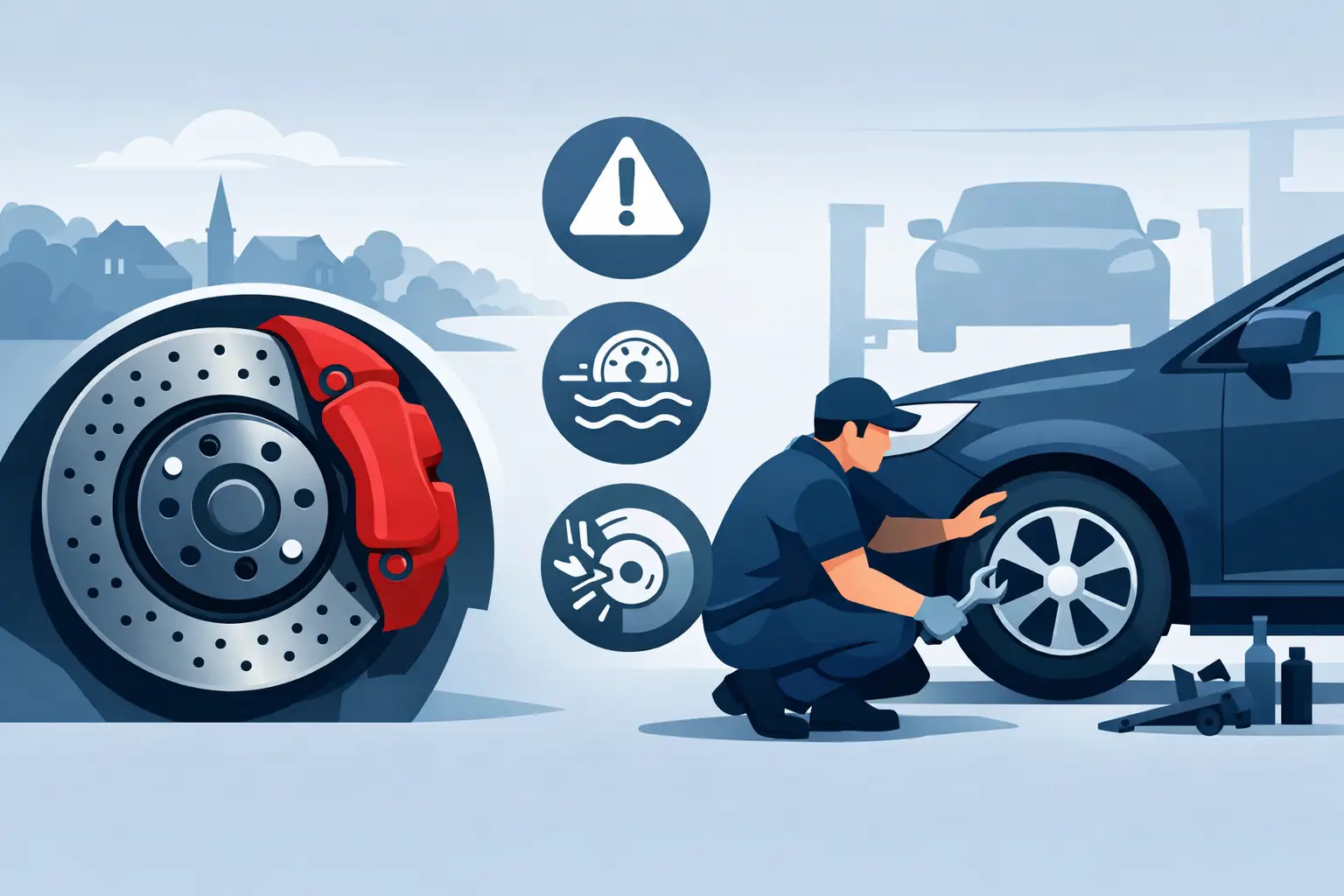
You rarely get much warning when brake trouble starts to affect your day. One week the car feels normal on the school run or commute, and the next you notice a squeal at traffic lights, a longer stopping distance, or a pedal that does not feel quite right. If you are looking for brake repairs High Wycombe drivers can rely on, the key is not to wait and hope the problem disappears. Brakes are one of those systems where small issues have a habit of becoming bigger, more expensive, and more dangerous if left too long.
Why brake problems should never be put off
Most drivers are busy. If the car still starts, still moves, and still gets you to work, it is tempting to push repairs back another week. The trouble with brakes is that wear is gradual until it suddenly is not. Brake pads do not go from healthy to failed overnight, but once they are badly worn they can damage the discs as well. What could have been a fairly straightforward repair then turns into a larger bill.
There is also the safety side, and that matters just as much as cost. Good brakes help you react to the unexpected – a car stopping sharply ahead, a cyclist appearing at a junction, or wet road conditions on a dark Buckinghamshire morning. When the braking system is not working properly, your stopping distance can increase, your vehicle can become less stable under braking, and your confidence behind the wheel drops with it.
Common signs you may need brake repairs in High Wycombe
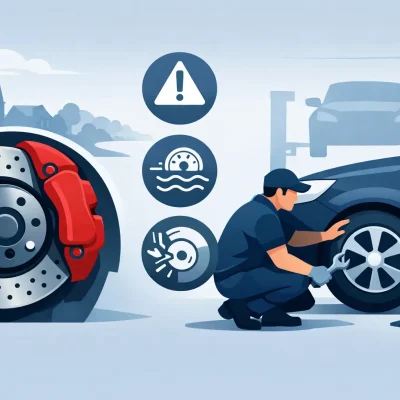
Some warning signs are obvious, while others are easier to dismiss. A screeching or grinding noise is one of the clearest signals that something needs attention. Squealing can mean the pads are worn, while grinding often suggests the wear has gone further and metal parts may be contacting where they should not.
A soft or spongy brake pedal is another sign to take seriously. If the pedal feels different under your foot, needs more pressure than usual, or sinks lower than expected, there may be an issue with hydraulic pressure, brake fluid, or worn components. Brakes should feel consistent. If they do not, that is reason enough to get them checked.
You might also notice the car pulling to one side when braking. That can point to uneven brake wear, a sticking caliper, or another fault affecting how evenly braking force is applied. Sometimes drivers assume it is a tyre issue, but it is not something to guess at.
Then there is vibration through the pedal or steering wheel. In some cases, that can mean worn or uneven brake discs. It depends on the vehicle and the symptoms, but any shaking when braking is worth investigating rather than living with.
The signs people often ignore
Not every brake issue announces itself loudly. Some people simply notice that the car does not feel as sharp stopping at roundabouts or in traffic. Others spot the brake warning light and carry on for a few days because the car still seems driveable. Reduced braking performance, odd smells after a journey, or a handbrake that feels weaker than usual can all be early indicators.
These are the faults that often catch people out. By the time the car goes in, what started as wear on one part has affected another.
What usually causes brake wear?
Brake components are consumable parts, so some wear is completely normal. Pads and discs do not last forever, and how long they last depends on your driving style, mileage, vehicle type, and the roads you use most. Stop-start town driving tends to wear brakes faster than steady motorway journeys. Hills, heavy loads, and frequent short trips can all make a difference too.
Sometimes the issue is not simple wear. A sticking caliper can cause one brake to drag. Old or contaminated brake fluid can affect performance. In some cases, low-quality parts fitted elsewhere may wear out sooner than expected. This is why proper inspection matters. The right repair depends on what is actually causing the problem, not just the symptom you noticed first.
What happens during a brake inspection?
A proper brake check should give you a clear picture of what is worn, what still has life left in it, and what needs doing now. That usually includes inspecting the brake pads, discs, calipers, brake fluid condition, and the overall performance of the braking system.
If repairs are needed, the garage should explain them in plain English. For most customers, that matters as much as the repair itself. No one wants to be handed a list of parts with no idea what is urgent and what is optional. Honest advice means being told what is unsafe, what is worn, and what can reasonably wait.
At a local garage, that conversation is often simpler and more straightforward. You are not looking for a sales pitch. You are looking for confidence that the work is necessary, fairly priced, and done properly.
Brake pads, discs and fluid – what is the difference?
Brake pads are the parts that press against the discs to slow the car down. Because they create friction, they wear down over time and need replacing periodically. If they are left too long, they can wear through and start damaging the discs.
Brake discs are the metal surfaces the pads grip onto. They also wear, though usually more slowly than pads. Some discs can last through more than one set of pads, but not always. If they are scored, too thin, or unevenly worn, replacement may be the safer option.
Brake fluid is what transfers force through the braking system when you press the pedal. It is easy to overlook because you do not see it wearing in the same way, but it does degrade over time. If it absorbs moisture or loses effectiveness, braking performance can suffer. That is why brake maintenance is not only about pads and discs.
Why cheaper is not always cheaper
Most drivers want fair pricing, and rightly so. But with brake work, the cheapest quote on the day is not always the best value over time. Part quality, fitting standards, and correct diagnosis all matter. A poor-quality component that wears quickly or a fault that is only half-resolved can mean another visit sooner than expected.
That does not mean the most expensive option is automatically better either. Good garages are clear about what your car needs and what you are paying for. The aim should be reliable braking and sensible value, not upselling or cutting corners.
Brake repairs High Wycombe motorists often need before an MOT
A lot of brake faults come to light around MOT time. That makes sense, because braking performance and condition are key parts of the test. Worn pads, damaged discs, fluid leaks, or an ineffective handbrake can all lead to problems.
That said, MOT season should not be the first time brakes are looked at. If your car is already showing signs of trouble, it is far better to deal with them before the test. It takes the stress out of the process and lowers the chance of a fail for something that could have been sorted earlier.
For local drivers, convenience matters here. Having your brakes checked and repaired by a trusted garage in the same area makes life easier, especially when the car is used daily for work, school runs, shopping, and everything else that depends on it.
Choosing a garage for brake repairs in High Wycombe
Most people are not searching for technical brilliance wrapped in jargon. They want a garage that will tell them the truth, carry out the work properly, and charge a fair price. That is especially true with brake repairs, where there can be understandable anxiety about safety and cost.
A good local garage should inspect the problem properly, explain the findings clearly, and avoid recommending work that is not needed. It should also be able to work on all makes and models without making the process feel complicated. For many motorists, that straightforward approach is the reason they return year after year.
Kingshill Autos takes that kind of approach because it is what local drivers actually want – honest advice, dependable workmanship, and no hidden surprises.
When to book your car in
If your brakes are noisy, inconsistent, slow to respond, or simply do not feel right, book the car in sooner rather than later. Even if the issue turns out to be minor, getting it checked gives you peace of mind. If it is more serious, you have caught it before it develops into a bigger repair.
There is no benefit in second-guessing brake faults from your driveway or hoping they will sort themselves out. Brakes should feel strong, predictable, and quiet. When they do not, that is your cue to act.
A reliable car is not just one that starts each morning. It is one that stops exactly when it should, without fuss, noise, or doubt.