
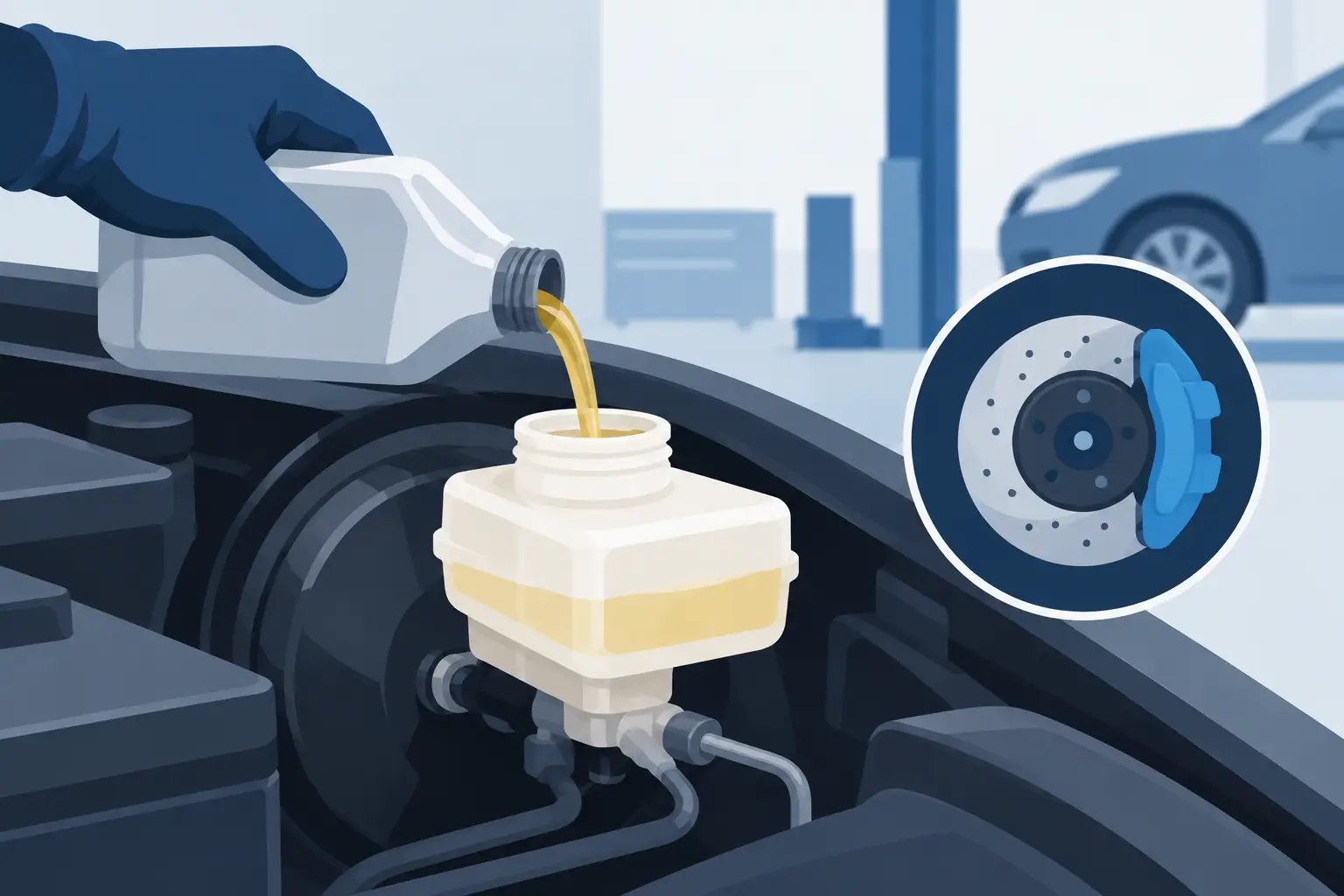
Your brakes may feel normal on the school run, commute or weekly shop, yet the fluid working inside the system could still be past its best. A brake fluid change is one of those routine jobs that is easy to overlook because there is no obvious noise or dashboard reminder on many cars. However, fresh fluid helps protect a safety-critical system and gives your brakes the best chance of working as intended when you need them most.
Brake fluid is not a visible wear item like tyres or brake pads, but it has an equally important role. It transfers the force from your foot on the pedal to the brakes at each wheel. Over time, it can absorb moisture from the air, which is why manufacturers specify replacement intervals rather than waiting for a fault to appear.
Why brake fluid needs changing
Most modern brake fluids are hygroscopic, meaning they gradually take in water vapour. This happens naturally over time through hoses, seals and the tiny amount of air exchange at the reservoir. The fluid may still look reasonably clean, but that does not necessarily mean it is in good condition.
As moisture builds up, the boiling point of the fluid falls. Under repeated heavy braking, such as on a long descent, in stop-start traffic or when towing, brake components get hot. If contaminated fluid gets too hot, moisture within it can form vapour. Unlike brake fluid, vapour compresses, which can leave the pedal feeling soft and reduce braking effectiveness.
Water contamination can also encourage corrosion inside expensive parts of the braking system, including brake pipes, calipers, wheel cylinders and the ABS hydraulic unit. Replacing fluid at the recommended time is often far more affordable than repairing components damaged by internal corrosion later on.
How often should you book a brake fluid change?
The best answer is in your vehicle handbook or service schedule. Many manufacturers recommend a brake fluid change every two years, while others specify three years or a different interval. Some newer cars use electronic service indicators, but the manufacturer schedule should always be the starting point.
The interval can depend on the make, model, age and braking system fitted to your car. A vehicle that covers low mileage still needs attention because brake fluid deteriorates with time, not simply miles travelled. Equally, a car used regularly for motorway journeys, hills, towing or urban traffic may place more heat demand on its braking system.
If you have bought a used car and there is no clear record of when the fluid was last replaced, it is sensible to ask a garage to check the service history and advise you. Guesswork is not helpful where brakes are concerned. A clear record gives you a proper baseline for future maintenance.
A low fluid level is not the same as old fluid
The brake fluid reservoir should not normally need frequent topping up. A slowly falling level may simply reflect worn brake pads, as the caliper pistons move further out, but it can also point to a leak. It needs checking rather than being topped up and forgotten.
A reservoir level also cannot tell you whether the fluid is due for replacement. The level, colour and age of brake fluid are different things. During servicing, a technician can assess the system properly and make sure there are no leaks, damaged pipes or other issues that deserve attention.
Signs you should have your brakes checked promptly
Routine replacement should be planned around the manufacturer interval, not around symptoms. Still, certain changes should never wait until the next service. A spongy pedal, an unusually low pedal, a brake warning light, a vehicle pulling to one side, grinding noises or reduced braking performance all need prompt professional inspection.
These symptoms do not automatically mean that old brake fluid is the cause. They may be linked to worn pads or discs, seized calipers, a fluid leak, air in the system or an ABS fault. Simply changing the fluid without diagnosing the underlying problem would not be a proper repair.
If the red brake warning light comes on while driving, or the pedal suddenly feels very different, stop somewhere safe as soon as you can and arrange for the vehicle to be checked. Do not take chances with a system designed to stop the car safely.
What happens during a brake fluid change?
A proper brake fluid service is more than removing some fluid from the reservoir and adding fresh fluid. The old fluid needs to be displaced from the hydraulic circuits at each wheel, using the correct procedure for the vehicle. This ensures as much of the old, moisture-contaminated fluid as possible is removed from the system.
The technician will first confirm the correct fluid specification. Most vehicles use a DOT 4 fluid, but this is not universal. DOT 3, DOT 4, DOT 4 LV and DOT 5.1 products have different properties and manufacturer requirements. Silicone-based DOT 5 is not interchangeable with standard glycol-based brake fluids, so using the right specification matters.
The system is then carefully bled in the correct order, with fresh fluid introduced and air prevented from entering the lines. On some modern vehicles, especially those with advanced ABS or electronic brake systems, diagnostic equipment or a specific bleeding procedure may be required. The garage should also inspect visible brake pipes, flexible hoses, calipers and the condition of pads and discs where accessible.
Once the work is complete, the pedal feel and fluid level are checked, and the vehicle is inspected for leaks. Brake fluid can damage paintwork, so clean, careful handling is part of doing the job properly.
Is a brake fluid change included in a service or MOT?
It depends on the service level and the garage. An interim or full service may include a brake inspection, but brake fluid replacement is often scheduled separately according to the manufacturer interval. Always ask what is included so there are no surprises on the invoice.
An MOT also does not replace routine brake maintenance. During an MOT, the braking system is tested and checked against the required safety standards at that time. The tester may identify visible leaks, poor brake performance or damaged components, but an MOT pass does not confirm that the brake fluid has been renewed at the correct interval.
That is why keeping servicing records matters. It helps you stay on top of work that may not show up as an MOT failure but still protects the reliability and lifespan of your vehicle.
Can you change brake fluid yourself?
Brake fluid replacement is possible for an experienced home mechanic with the correct tools, fluid and vehicle-specific knowledge. However, it is not a job to approach casually. Introducing air into the system, using the wrong fluid, damaging a bleed nipple or failing to identify a leak can all create a serious safety issue.
Modern cars can add another layer of complexity. Some require a pressure bleeder, diagnostic activation of ABS components or a particular sequence set by the manufacturer. For many drivers, having the work carried out by a qualified local garage is the more straightforward and reassuring option.
What affects the cost of a brake fluid change?
The price should be clear before work begins. Costs vary according to the fluid specification, the amount required, the layout of the braking system and whether the vehicle needs a more involved procedure. A straightforward change on a common family car is usually simpler than work on a vehicle with specialist fluid requirements or electronic bleeding procedures.
If a garage finds seized bleed nipples, leaking pipes or other faults during the job, these should be explained separately before additional work is carried out. A brake fluid service should not become an excuse for unexpected repairs. At Kingshill Autos, the aim is to explain what has been found in plain language, provide an honest quote and let you make an informed decision.
Book brake fluid replacement in line with your vehicle’s schedule, keep the invoice with your service records, and ask questions if anything is unclear. It is a small piece of planned maintenance that can help keep every ordinary journey feeling properly under control.


