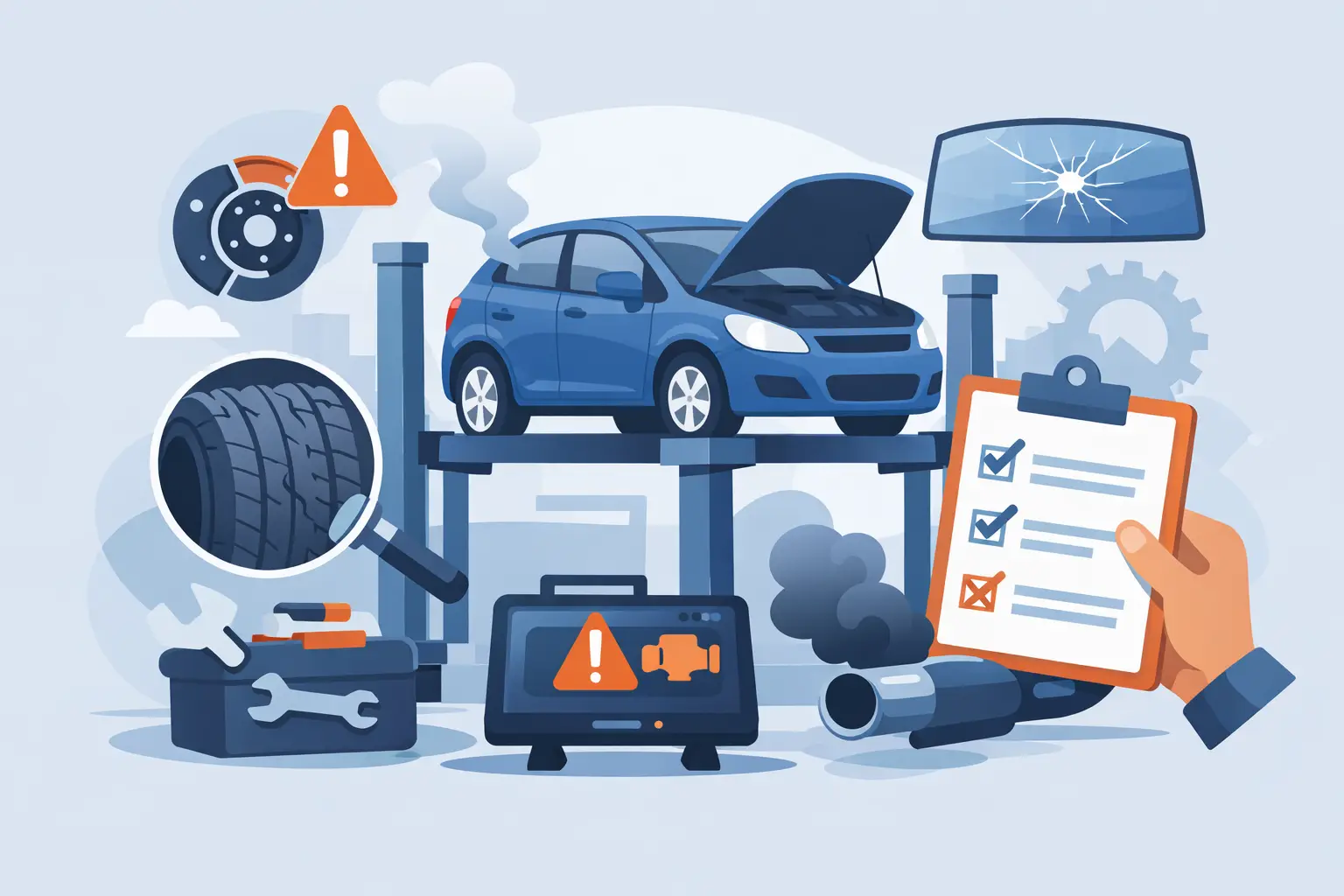
An MOT failure often comes down to something small, annoying and avoidable. A blown bulb, worn tyre or split wiper blade can turn a routine test into extra cost, extra time off work and the hassle of getting it sorted sooner than planned. If you have ever wondered about the top reasons cars fail MOT, the good news is that many of them can be spotted before test day.
That matters because an MOT is not a full service. It is a legal roadworthiness check carried out at the time of the test, so a car can drive perfectly well and still fail on a safety item. Equally, a car that has been serviced regularly usually stands a much better chance of passing first time because wear and tear has been picked up earlier.
The top reasons cars fail MOT
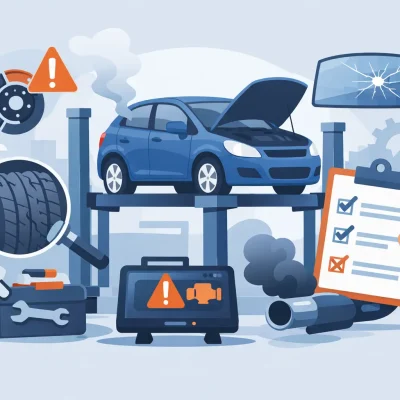
Most MOT failures fall into a familiar pattern. Lighting and signalling faults are common, tyres are a regular issue, and visibility problems such as poor wipers or screen damage catch out plenty of drivers. Brakes, suspension and emissions also feature high on the list, especially on older vehicles or cars that cover a lot of stop-start miles.
The key thing to remember is that failure does not always mean a major repair bill. Sometimes it does, especially if there is a deeper mechanical problem, but often it is something straightforward. Knowing where the common trouble spots are can save you stress and help you plan properly.
Lights and indicators
This is one of the simplest reasons for a fail, and one of the most frustrating because it is so easy to check at home. Headlights, brake lights, number plate lights and indicators all need to work properly. If one bulb has gone, your car can fail.
It is not only about whether the light comes on. Testers also look at the condition of the lenses, the colour of the lights and the aim of the headlights. A headlamp pointed too high or too low can be a problem, and cloudy or damaged lenses can reduce visibility.
If you rarely walk around your car while the lights are on, faults can go unnoticed for weeks. Asking someone to help you check them the evening before your MOT is a simple step that can make a difference.
Tyres below the legal standard
Tyres are another major reason cars fail MOT tests. The legal minimum tread depth is 1.6mm across the central three-quarters of the tyre, around the entire circumference. If tread is below that, it is an automatic fail.
But tread depth is not the whole story. Cuts, bulges, exposed cords and serious sidewall damage can all lead to failure too. Uneven wear is also worth paying attention to. It might mean your wheels need alignment or there is a suspension issue in the background.
A tyre can look acceptable at a glance and still be too worn when measured properly. If you are doing plenty of motorway miles or regular commuting around High Wycombe and the surrounding area, tyres can wear faster than you expect.
Brakes and brake components
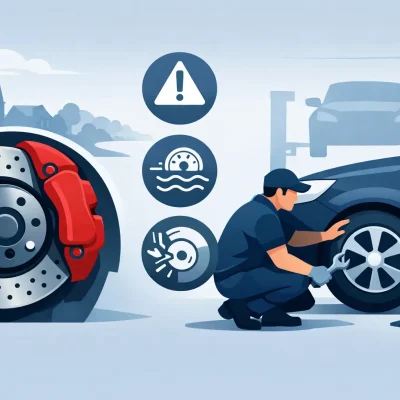
Drivers often notice brake problems only when they become obvious – squealing, grinding, pulling to one side or a longer stopping distance. By that stage, there may already be enough wear to cause an MOT failure.
The MOT checks the performance and condition of the braking system. Worn brake pads, damaged discs, seized components or imbalanced braking force can all create issues. A warning light on the dashboard can be another red flag.
This is one area where putting things off rarely saves money. Catching brake wear early is usually more affordable than waiting until extra parts are damaged. More importantly, brakes are a safety-critical item, so any concern is worth getting checked sooner rather than later.
Why visibility issues cause so many MOT failures
Visibility is easy to take for granted until the weather turns. MOT testers check that the driver has a clear view of the road, and that means more than just having a clean windscreen.
Wipers and washers
Wiper blades need to clear the screen effectively. If they smear, miss sections or have torn rubber, they may not do the job safely. Washer jets also need to work and supply enough fluid to help clean the screen.
This is one of the most common everyday faults because wipers wear gradually. You get used to them not performing well, especially if the issue is only obvious in heavy rain. Replacing wiper blades is usually quick and inexpensive, which makes this a very avoidable fail.
Windscreen damage
Small chips and cracks can become an MOT issue depending on where they are and how severe they are. Damage in the driver’s line of sight is treated more seriously than damage elsewhere.
There is a bit of an it depends factor here. Not every chip means failure, but if it affects the area the tester considers critical for visibility, it can. If a chip has started spreading, it is best not to leave it.
Suspension, steering and general wear
Cars do not have to feel dramatically wrong to have wear in suspension or steering parts. In fact, many drivers adapt to gradual changes without realising it.
Worn shock absorbers, damaged springs, loose joints and other steering or suspension faults are common MOT failures. You might notice clunks over bumps, a vibration through the steering wheel or the car feeling unsettled on rough roads. Sometimes there are no obvious signs at all until the car is inspected properly.
This is where regular servicing earns its keep. An MOT may identify the fault, but a routine inspection often finds it sooner, before it develops into a bigger issue or contributes to uneven tyre wear.
Number plates and registration visibility
Number plates are often overlooked, yet they still cause failures. Plates must be secure, legible and in the correct format. If they are cracked, badly faded, too dirty to read clearly or not displayed properly, that can be enough to fail.
It sounds minor, but it reflects the wider point that MOT standards cover the whole vehicle, not only the engine and major mechanical parts. Little details matter.
Emissions and warning lights
Emissions failures can be more complicated than a blown bulb or worn blade. Modern cars rely on sensors, exhaust components and engine management systems working together properly. If something is wrong, the vehicle may produce emissions outside the allowed limits.
A dashboard warning light can also affect the result. Engine management lights and other safety-related warning lights should never be ignored in the run-up to an MOT. Sometimes the cause is relatively minor, but sometimes it points to a deeper issue that needs diagnosing.
Cars used mainly for short journeys can be more prone to emissions problems, particularly diesel models. They may not get hot enough on regular trips to clear themselves properly, and that can contribute to trouble at test time. Again, it depends on the car, the fault and how it has been driven, but if a warning light is on, it is wise to have it checked before the test rather than hoping for the best.
Simple checks before your MOT
If you want to reduce the chance of failing on one of the top reasons cars fail MOT tests, a few basic checks are worth doing. Have a look at all external lights, inspect your tyres, make sure the washers work and top up the screen wash, and check the wipers are clearing the glass properly. Clean the number plates and windscreen, and pay attention to any warning lights on the dashboard.
If the car has been making odd noises, pulling to one side or feeling different under braking, do not ignore it. Those are often the clues that point to the very items MOT testers pick up.
For many local drivers, the best approach is not to wait until the MOT reminder arrives. Keeping on top of routine servicing through a trusted local garage means there are fewer surprises when test day comes around. At Kingshill Autos, that is often what we tell customers who want the most cost-effective route – maintain the car steadily, deal with small issues early, and the annual MOT becomes a lot less stressful.
An MOT should not feel like a gamble. Most failures come from familiar wear and tear, and many can be avoided with a little attention before the test. If your car is due soon, giving it a proper once-over now could save you a return visit later.