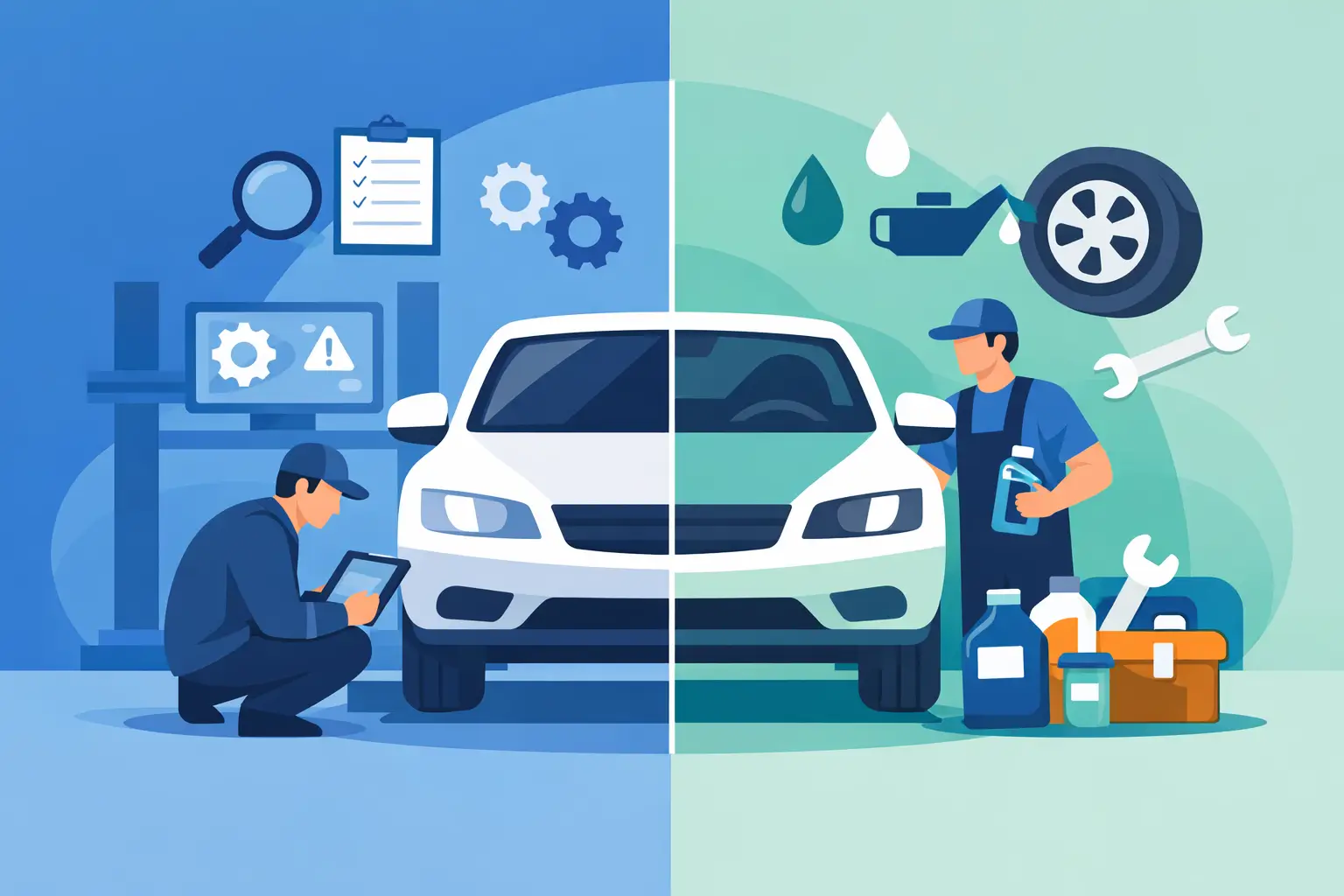
If your car is due some attention and you’re not sure whether it needs an MOT, a service, or both, you’re not alone. The difference between MOT and service catches a lot of drivers out, especially when both often fall around the same time and both involve taking your car to a garage. They are connected, but they are not the same thing.
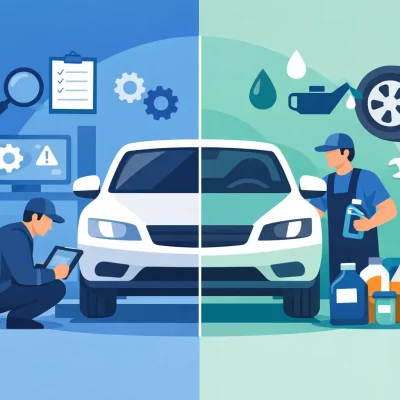
An easy way to think about it is this: an MOT is a legal check to make sure your car meets minimum road safety and environmental standards, while a service is routine maintenance that helps keep your car running properly. One is about whether the car is fit to be on the road on the day it is tested. The other is about looking after the vehicle over time.
The difference between MOT and service in simple terms
An MOT is an annual inspection required by law for most cars over three years old. It checks key parts of the vehicle, such as the brakes, tyres, lights, suspension, steering, emissions and other safety-related items. At the end, the car either passes, fails, or passes with advisories.
A service is not a legal requirement, but it is strongly recommended. It is a planned check and maintenance visit based on time or mileage. During a service, a technician will inspect the condition of important components, replace worn service items such as oil and filters where appropriate, and spot issues before they turn into bigger, more expensive repairs.
That’s why a car can pass an MOT and still need a service. It can also be serviced regularly and still fail an MOT if something safety-related has worn out or stopped working.
What an MOT actually checks
An MOT is not a full health check for your vehicle. That’s one of the biggest misunderstandings drivers have.
The test focuses on specific items set out by the DVSA. It looks at whether those parts meet the required legal standard at the time of the test. For example, the tester checks if your tyres have enough tread, whether your lights work properly, whether the brakes perform as they should, and whether the emissions are within acceptable limits.
It does not involve replacing parts as standard, and it does not include general maintenance. If your engine oil is old, your air filter is dirty, or your spark plugs are due for replacement, that would not normally form part of an MOT. A car could still pass if those items do not affect the test criteria.
This is why an MOT should never be treated as a substitute for servicing. It tells you whether the vehicle meets a minimum legal standard, not whether it is being maintained in the best way.
What happens if your car fails its MOT?
If your car fails, it means one or more items did not meet the required standard. Some failures are minor and straightforward to repair, such as a bulb or worn tyres. Others can be more serious, like brake problems or suspension wear.
A failure does not always mean the car has been badly maintained, but it often means something has been missed between annual checks. Regular servicing can help spot many of these issues earlier, which may save money and stress.
What a car service includes
A service is designed to keep your car in good working order. Exactly what is included depends on the type of service and the manufacturer’s schedule, but most services involve more than people expect.
A basic interim service will often include an oil and filter change, fluid checks, a brake inspection, tyre checks, and a look over the main safety and wear items. A full service goes further, with more detailed inspections and additional replacement items depending on the vehicle and service history. Some cars also need major services at set intervals, especially when items like spark plugs, fuel filters or timing belts are due.
Servicing is about prevention. It gives you a better chance of catching leaks, worn brakes, battery issues, tyre wear and other developing faults before they cause a breakdown or an MOT failure.
Why servicing matters even if the car seems fine
Modern cars can hide problems well. You might not notice worn components, ageing fluids or early signs of trouble until something becomes urgent. By that point, the repair bill is often higher.
Routine servicing helps protect reliability, fuel efficiency and resale value. It also gives you a clearer picture of what your car needs now and what might need attention soon. That matters if you use your car daily for work, school runs or commuting and simply need it to be dependable.
MOT or service – which one do you need?
Sometimes the answer is one or the other. Often, it is both.
If your car is more than three years old and its MOT expiry date is approaching, you need an MOT to stay road legal. If your mileage or service interval is due, you also need a service. These two dates often end up close together, but that is more about timing than meaning.
If your car is newer than three years old, it may not need an MOT yet, but it still needs servicing. That catches some owners by surprise. A newer car can avoid legal testing for a while, but skipping maintenance is still a false economy.
If your vehicle has not been serviced for a long time, booking only an MOT may not be enough. It could pass the test but still be overdue basic maintenance that affects performance and long-term reliability.
Can you book an MOT and service together?
Yes, and for many drivers it makes sense.
Booking them together can save time and cut down the hassle of separate garage visits. It also means your vehicle gets both the legal inspection and the practical maintenance it needs in one go. If a service picks up a problem that would cause an MOT failure, there may be a chance to deal with it quickly and avoid repeat appointments, depending on timing and parts.
That said, they are still separate jobs. Paying for both does not mean one replaces the other. You are getting two different types of inspection for two different purposes.
For many local motorists, combining them is the simplest option. At Kingshill Autos, that is often what customers choose because it is easier to keep the car legal, safe and properly maintained without making things more complicated than they need to be.
Common myths about the difference between MOT and service
One common myth is that if your car passed its MOT, it does not need servicing. That is not true. Passing an MOT only means the car met minimum legal standards on the day of the test.
Another is that a service guarantees an MOT pass. Again, not always. A well-serviced car is less likely to fail on neglected items, but faults can still develop between services.
Some drivers also assume an MOT includes an oil change or filter replacement. It does not. If those items are due, they need to be done as part of a service or separate maintenance work.
There is also the idea that servicing is optional in the sense that it does not really matter. Legally, it may not be compulsory in the same way as an MOT, but practically it matters a great deal. Skipping services usually catches up with a vehicle sooner or later.
How to decide what your car needs right now
If you are unsure, start with two dates: your MOT expiry date and your last service date. Then check your mileage. If the MOT is due soon, book it. If it has been around 12 months since your last service, or you have covered the recommended mileage since then, your car is likely due a service as well.
Also pay attention to warning signs. Strange noises, poor braking, sluggish performance, warning lights, vibrations or reduced fuel economy all suggest your car needs attention regardless of the calendar. In those cases, do not wait for the MOT date to roll around.
A good local garage should explain what is due, what can wait, and what is genuinely worth doing now. That matters because not every car follows the exact same pattern. Driving style, mileage, age and vehicle type all make a difference.
Why understanding the difference saves money
When drivers understand the difference between MOT and service, they usually make better decisions about their car. They are less likely to assume the MOT covers maintenance, and less likely to delay servicing until something goes wrong.
That can mean fewer surprise failures, better reliability and lower repair bills over time. It also helps you budget. An MOT is a legal annual cost. Servicing is part of keeping the car healthy. Treating both as normal running costs tends to be cheaper than dealing with avoidable breakdowns or major repairs.
If you are ever unsure, ask. A straightforward garage will be happy to explain what your car actually needs without dressing it up in jargon or pushing work that is not necessary. A little clarity goes a long way when it comes to keeping your car safe, road legal and ready for everyday life.