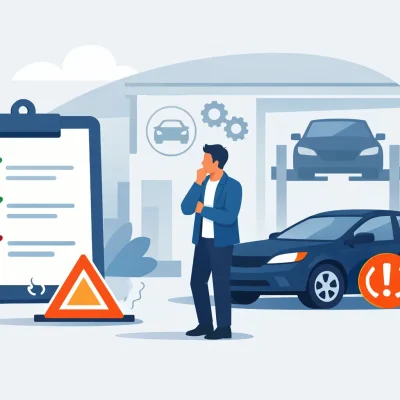
You collect your car, hear the words “it’s failed”, and the first question is usually the same – can I drive after MOT failure? The answer is sometimes, but not always. It depends on why the vehicle failed, whether the previous MOT is still valid, and whether the car is considered dangerous to drive.
That uncertainty catches a lot of drivers out. Many assume a failed MOT means the car must stay where it is. Others think they can carry on as normal until the old certificate runs out. Neither is always right, which is why it helps to understand the rules clearly before you get back behind the wheel.
Can I drive after MOT failure if my old MOT is still valid?
In many cases, yes. If your vehicle fails its MOT before the expiry date of the current MOT certificate, the existing certificate usually remains valid until it runs out. That means you may still be able to drive the car legally.
But there is an important catch. The vehicle still has to be roadworthy. If the MOT test has identified a dangerous fault, you should not drive it, even if the current MOT has days or weeks left. A valid certificate does not make an unsafe car legal to use on the road.
This is the part that matters most. MOT status and roadworthiness are related, but they are not exactly the same thing. A car can technically still have a live MOT and yet be unsafe to drive because a serious problem has been found during the test.
Can I drive after MOT failure if the MOT has expired?
This is where the rules become tighter. If the MOT has already expired and the vehicle has failed its test, you cannot just carry on using it as normal.
There is one main exception. You are usually allowed to drive the vehicle to a pre-booked MOT test appointment, or to a garage for repairs after a failed test. That does not give you free use of the car for shopping trips, commuting, or school runs. It only covers that specific journey.
Even then, the vehicle must still be safe to drive. If it has been marked with a dangerous defect, driving it to another garage or back home can still be unlawful and unsafe. In those situations, recovery is often the better option.
What counts as a dangerous fault?
An MOT result can include minor, major, and dangerous defects. A dangerous defect is the most serious category. It means the problem poses a direct risk to road safety or has an impact on the environment.
Common examples might include severely worn tyres, brakes that are not working properly, major steering issues, or lights that leave the vehicle unsafe to use. If your car has a dangerous defect, the tester should make that clear on the paperwork.
If you have been told the fault is dangerous, take that seriously. The safest approach is not to drive the car at all until it has been repaired. Aside from the legal side, it simply is not worth risking your safety or someone else’s.
What if the failure is for something less serious?
A major defect still causes an MOT failure, but it is not automatically the same as a dangerous defect. This is where some drivers get confused.
A car that fails on a major defect may, in some situations, still be driveable if the previous MOT remains valid and the vehicle is roadworthy. That said, “may” is doing a lot of work there. The exact fault matters.
For example, a failure linked to emissions or a worn suspension component may not present the same immediate risk as failed brakes or exposed tyre cords. Even so, any failed MOT should be treated as a sign that repairs are needed promptly. Putting it off often makes the problem worse and can cost more later.
Does insurance still cover you after an MOT failure?
This is another area where drivers should be careful. A failed MOT does not automatically mean your insurance becomes void on the spot, but driving an unroadworthy vehicle can create serious problems if you need to make a claim.
If the car has a known fault and you continue to drive it, your insurer may argue that you used the vehicle in an unsafe condition. That can affect how a claim is handled, especially after an accident.
So while people often focus on whether driving is technically allowed, the smarter question is whether it is sensible. If the vehicle has failed for a fault that affects safety, arranging repairs straight away is usually the best move.
What should you do straight after a failed MOT?
First, read the MOT failure sheet properly. Do not just look at the word “fail” and assume every case is the same. The report will show whether the defects are major or dangerous, and that tells you a lot about what happens next.
Second, ask the garage to explain the faults in plain English. A good local garage should be happy to do that. You should know what the issue is, how urgent it is, and whether the vehicle should stay off the road.
Third, decide the safest next step. If the defect is dangerous, do not drive the vehicle away. If it is a non-dangerous failure and your current MOT is still valid, ask whether it is sensible to drive it or whether repair should happen before any further use.
At Kingshill Autos, that is exactly how we approach it – clear advice, honest explanations, and no pressure.
Driving to a repair garage after an MOT failure
Many drivers ask whether they can take the car elsewhere for repairs. In principle, yes, you can usually drive to a garage for pre-arranged repairs after a failed MOT. But again, the vehicle must be safe to drive.
If the car has been marked dangerous, driving it any distance is a risk. If the issue affects braking, steering, tyres, or another critical system, recovery is often the right answer.
It is also worth being practical. Even if a journey might be legally defensible, that does not always make it wise. A ten-minute drive on quiet local roads is not the same as a motorway run in poor weather.
What happens if you drive illegally after a failed MOT?
If you drive a vehicle that should not be on the road, you could face penalties. That might include a fine for having no valid MOT, and separate action if the vehicle is found to be in a dangerous or unroadworthy condition.
Those are not just technical offences. Roadworthiness rules exist because faults can lead to real harm. Something as simple as worn tyres or weak brakes can turn a routine trip into an accident.
For most drivers, the bigger issue is inconvenience. If the car is not safe, carrying on for a few more days can lead to breakdowns, failed repairs becoming bigger jobs, and a lot more disruption than sorting it quickly in the first place.
The safest rule of thumb
If you are still asking, “can I drive after MOT failure?”, use this simple rule. If the car has a dangerous fault, do not drive it. If the previous MOT has expired, only drive to a pre-booked test or repair appointment, and only if the vehicle is roadworthy. If the old MOT is still valid, that does not override a serious safety issue.
This is one of those situations where a clear answer depends on the exact condition of the vehicle. The paperwork matters, but so does common sense. If anything about the car feels unsafe, do not chance it.
A failed MOT is frustrating, but it does not need to become a bigger headache. Get the fault explained properly, have the repairs carried out by a garage you trust, and make sure the car is safe before it goes back on the road. That way, you are not just staying on the right side of the rules – you are looking after yourself, your passengers, and everyone else around you.