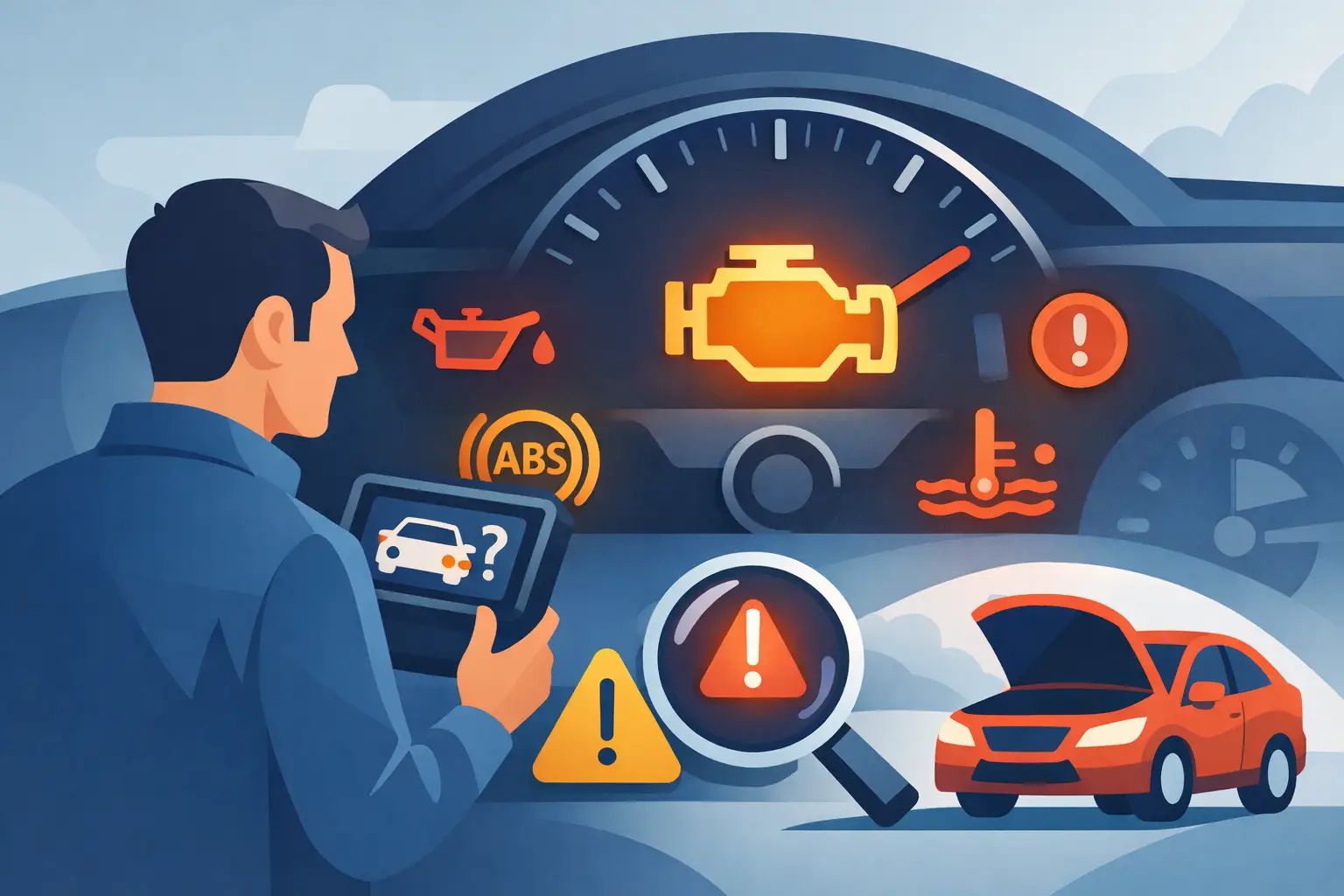
That moment a warning light appears on the dashboard can make even a confident driver feel uneasy. If you have ever wondered how to read engine warning lights without panicking or guessing, the good news is that the basics are simpler than they look. The key is knowing what the light is trying to tell you, how urgent it is, and whether the car is still safe to drive.
Modern cars are designed to warn you early when something is not quite right. Sometimes that warning is minor, such as a loose fuel cap or a service reminder. Sometimes it points to a problem that needs attention quickly, such as low oil pressure or an overheating engine. The trick is not to ignore the light, but not to assume the worst either.
How to read engine warning lights by colour
The fastest way to judge a dashboard warning is by its colour. Manufacturers do vary slightly, but the general rule is consistent across most vehicles.
A red warning light usually means stop as soon as it is safe to do so. Red is used for faults or conditions that could damage the car or affect safety if you carry on driving. That might include oil pressure, engine temperature, brake system faults, or charging problems.
An amber or yellow warning light normally means caution. The car may still drive, but it should be checked soon. A management light, emissions fault, glow plug warning, or tyre pressure alert often falls into this category. It is not always an emergency, but it is not something to leave for weeks either.
A green or blue light is usually informational rather than a fault. These are often things like headlights, indicators, or cruise control. They are there to show a system is operating.
If you remember one thing, make it this: red means stop and assess, amber means book it in, and green or blue usually means the car is simply telling you something is on.
The most common engine-related warning lights
Some dashboard symbols are easier to recognise than others. A few come up time and again, especially on cars used for short trips, school runs, or regular commuting.
The check engine light
This is often the light drivers worry about most. It may look like the outline of an engine and can come on in amber. It is linked to the engine management system, which monitors performance, fuel, ignition, and emissions.
Sometimes the cause is relatively minor. A sensor may be giving an odd reading, or the engine may be running less efficiently than it should. In other cases, the fault can affect fuel economy, emissions, or drivability. If the light is steady and the car feels normal, you can usually drive cautiously for a short time and arrange diagnostics as soon as possible. If it is flashing, that is more urgent and you should avoid driving further if you can.
Oil pressure warning light
This usually looks like an old-style oil can and is one of the lights you should take seriously. It does not simply mean the oil level is a bit low. It can also mean the engine is not getting proper oil pressure, which is what protects internal parts from wear.
If this light comes on red while driving, pull over safely and switch off the engine. Carrying on could lead to serious engine damage. In some cases, it may be caused by low oil, but the underlying issue could also be a pump, blockage, or leak.
Engine temperature warning light
Often shown as a thermometer over waves, this tells you the engine is too hot. Overheating can happen for several reasons, including low coolant, a leak, a failed thermostat, or radiator problems.
If this light comes on red, stop when safe and allow the engine to cool before checking anything. Never open the coolant cap while the engine is hot. Steam and pressure can cause burns. A one-off rise in traffic might not mean major damage, but repeated overheating should always be looked at properly.
Battery or charging system light
This light often looks like a battery symbol. Despite the name, it does not always mean the battery itself has failed. It may point to the alternator, wiring, or drive belt not charging the battery correctly.
If this light appears, the car may continue running for a while, but only until the battery charge runs down. You might notice dim lights, electrical faults, or difficulty restarting. It is best not to ignore it, especially if you rely on the car daily.
Glow plug warning light on diesel cars
Diesel vehicles often show a coil-shaped symbol before starting. That is normal for a cold start. If it stays on, flashes, or appears while driving, it may suggest a fault with the glow plug system or engine management.
On some diesels, this light can also point to a broader engine issue rather than glow plugs alone. That is where proper fault reading matters, because the same symbol can mean slightly different things depending on the make and model.
What the warning light does not tell you
One of the biggest frustrations for drivers is that the light rarely tells the full story. A dashboard symbol is a warning, not a diagnosis. It tells you which system has noticed a problem, but not always which part has failed.
That is why two cars with the same engine light might have completely different faults. One could need a small sensor replacement. Another could have an ignition problem, fuel issue, or emissions fault. Reading fault codes with proper diagnostic equipment helps narrow it down, but even then, a technician often needs to confirm the cause rather than replacing parts on guesswork.
This is also why internet searches can be useful but limited. They may point you in the right direction, but they cannot tell you for certain what is happening on your specific vehicle.
When it is safe to keep driving
This depends on the light, the colour, and how the car behaves. There is no single rule that covers every situation.
If the warning is amber and the car still starts, idles, accelerates, and brakes normally, you can often drive carefully for a short distance and arrange a check. If the engine is misfiring, losing power, smoking, making unusual noises, or the light is red or flashing, do not push your luck.
A car can sometimes feel almost normal even when a problem is developing. Equally, not every amber light means immediate danger. The sensible middle ground is to pay attention to both the dashboard and the car itself. If either one is telling you something is wrong, it is worth acting on it early.
How to read engine warning lights without misreading the symbols
The owner’s handbook is still one of the best places to start. Dashboard icons are not always identical across every manufacturer, and some symbols can look surprisingly similar. Checking the handbook gives you the exact meaning for your vehicle.
It also helps to notice the difference between a warning that stays on constantly and one that flashes. A steady light often means a fault has been logged. A flashing light can mean the issue is active and more urgent. The wording on the instrument cluster matters too, if your car displays a message alongside the symbol.
If you are unsure, take a quick photo of the dashboard before restarting the car. Some lights disappear after a restart, but that does not mean the fault has gone away. Having a record makes it easier to explain what happened when you get it checked.
Why warning lights should not be ignored for long
A small issue can become an expensive one if left too long. A misfire can damage a catalytic converter. Low oil can shorten engine life. Cooling faults can lead to overheating and head gasket damage. Even something less dramatic, like a sensor fault, can affect fuel economy and make the car harder to pass at MOT time if emissions are involved.
For most drivers, the best approach is simple. Do not panic, do not keep resetting warnings, and do not assume it will sort itself out. Clear information and a proper inspection usually save money compared with waiting until the car breaks down.
At a local garage such as Kingshill Autos, the aim should always be to explain the fault plainly, confirm what actually needs doing, and avoid replacing parts that are not necessary. That matters when you want honest advice rather than a long list of extras.
A sensible first response when a light comes on
If a warning light appears, start by checking the colour and whether the car feels different to drive. If it is red, stop as soon as it is safe. If it is amber, drive cautiously and book an inspection. If there are noises, smoke, overheating, heavy vibration, or loss of power, treat it as urgent whatever the symbol says.
If you can do so safely, basic checks such as engine oil and coolant level may help spot an obvious issue. Just make sure the engine is cool where needed, and do not attempt anything you are unsure about. There is no shame in getting advice early. Most drivers are not expected to diagnose modern engine systems from the dashboard alone.
A warning light is your car asking not to be ignored. Listen early, get it checked properly, and you give yourself the best chance of keeping the repair simple, affordable, and far less stressful.