
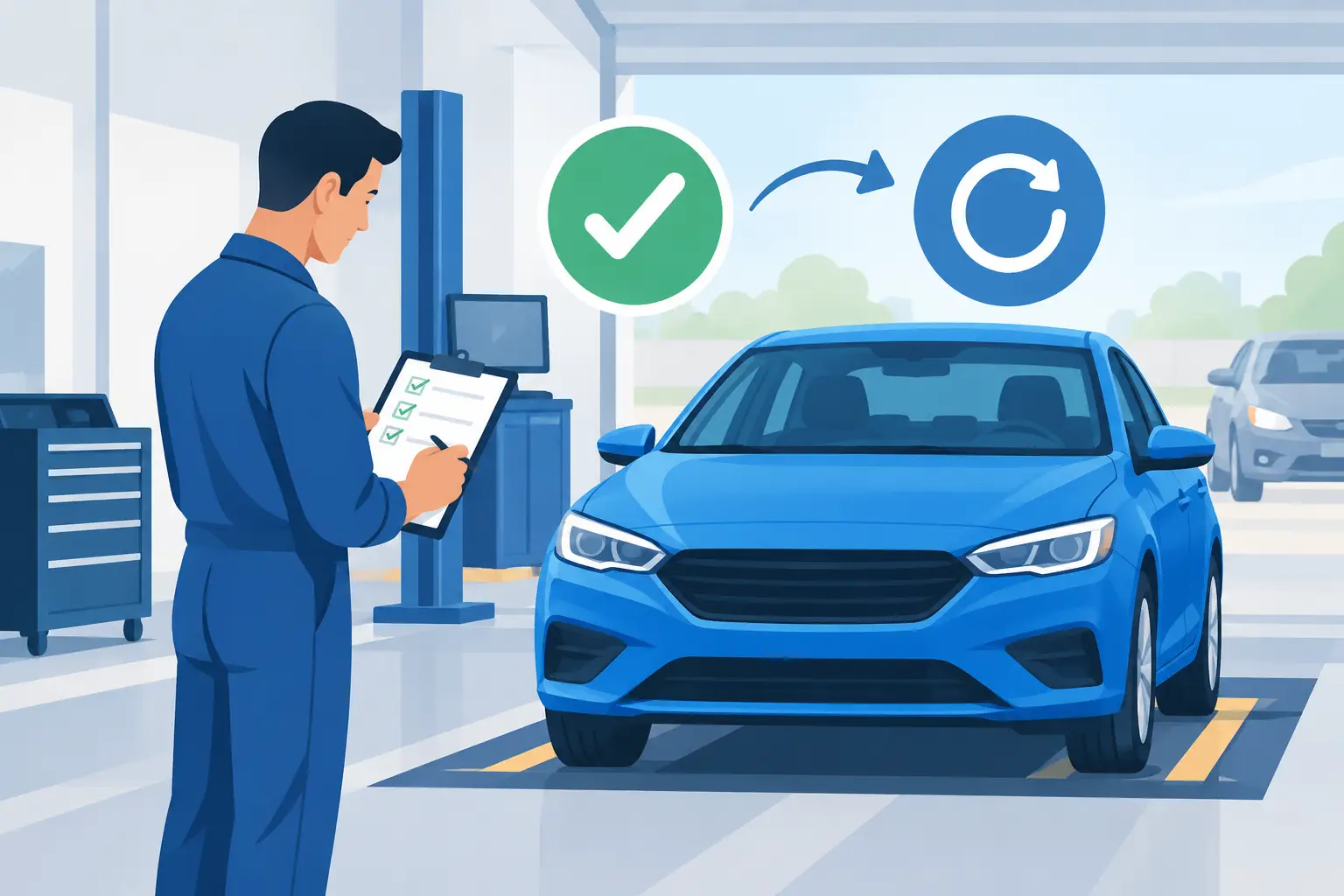
A failed MOT at the end of a busy day can feel like a major problem, especially when you rely on your car for work, school runs or getting around High Wycombe. The good news is that, in many cases, can an MOT be retested has a straightforward answer: yes. What matters is where the repairs are carried out, how quickly the vehicle returns and what it failed on.
An MOT failure does not always mean starting again with a completely new test. There are routes to a free or lower-cost partial retest, but the rules are time-sensitive. Knowing them can save you money and, just as importantly, help you stay on the right side of the law.
Can an MOT Be Retested After a Failure?
Yes, a vehicle can be retested after failing its MOT. The tester will give you a failure document listing the defects found, usually classed as dangerous or major. This is the starting point for deciding what needs repairing and whether a partial retest may be possible.
If the car is repaired and brought back to the same MOT test station within the permitted time, the tester may only need to inspect the items that caused the failure. That is known as a partial retest. If too much time passes, or the car returns to a different test centre, it will normally need a full MOT test instead.
It is worth dealing with the defects promptly. A small issue such as a blown bulb, worn wiper blade or tyre problem can often be resolved quickly. Other faults, including brake concerns, suspension wear or engine warning lights, may need more investigation before the vehicle is safe to put back on the road.
The 10 Working Day Rule
The key timeframe is usually 10 working days from the original MOT test. If your vehicle stays at the test station for repairs and is retested within that period, the retest is generally free.
If you take the vehicle away, the position can be different. A return on the same or next working day may qualify for a free partial retest in some circumstances. If you bring it back later, but still within 10 working days, a partial retest may still be available for certain failure items, although the garage can charge a retest fee.
The exact option depends on the defects recorded and the circumstances of the return. This is why it is sensible to ask the garage before taking the car away: will the vehicle qualify for a partial retest, what will it cost, and when is the latest it can return?
Once the 10 working days have passed, a full new MOT test is normally required. The tester must inspect the whole vehicle again, rather than simply checking the original faults.
Does a Retest Have to Be at the Same Garage?
For a partial retest, yes. It must be carried out at the same MOT testing station that issued the original failure.
You are free to have repairs completed elsewhere if you prefer. However, taking the car to another MOT centre for the follow-up check means that centre has no original test to retest against. It will carry out a full MOT, with the usual full-test charge.
For many drivers, it is simpler to have the repair and retest handled in one place. It avoids unnecessary journeys, keeps the process clear and means any questions about the original failure can be answered by the team that inspected the vehicle.
Will an MOT Retest Be Free?
Not every retest is free, so it is best not to assume. The cost depends on whether the vehicle remained at the test station, when it comes back and whether its failed items are eligible for a partial retest.
A free retest is most likely where the car is left with the MOT station, repaired there and retested within 10 working days. It can also be possible when the car returns very quickly after being taken away, depending on the failure points.
Where the car has been removed and returns later within the 10-working-day period, the test station may charge for a partial retest. This should be less than the cost and scope of a completely new MOT, but always ask for the price before authorising work. The repair bill is separate from the retest charge, so a clear quote should show both.
At a local garage, the useful question is not simply, “How much is the retest?” It is, “What has failed, what work is genuinely needed, and what are my retest options?” Clear answers help you make the right decision without surprises.
Can You Drive After an MOT Failure?
This is where drivers need to be careful. Whether you can legally drive depends on the defect category, whether your existing MOT certificate is still valid and whether the car is roadworthy.
A dangerous defect means the vehicle should not be driven until it has been repaired. Even if an earlier MOT certificate has not yet expired, a dangerous fault can make the car unsafe and illegal to use. Arrange recovery or repairs rather than taking the risk.
With a major defect, you may be able to drive if your current MOT is still valid and the vehicle remains safe and roadworthy. However, that is not a reason to delay repairs. The failed MOT is recorded, and a known fault affecting safety should be taken seriously.
If the old MOT has expired, you can generally drive only to a pre-arranged MOT test or to a pre-arranged repair appointment. The vehicle must still be roadworthy. An MOT appointment does not make it acceptable to drive a car with dangerous tyres, ineffective brakes or another serious safety problem.
Minor defects and advisories do not cause an MOT failure. Your car passes, but the report tells you what should be monitored or repaired. Advisories are not a bill to be ignored until next year. Tyres, brakes and fluid leaks can worsen gradually, often becoming more expensive if left unattended.
What to Do When Your Car Fails Its MOT
Start by reading the failure sheet rather than focusing only on the word “fail”. It tells you exactly what was found and whether the issue is dangerous or major. If any wording is unclear, ask the tester to explain it in plain English.
Next, decide whether the car should stay at the garage. For straightforward repairs, leaving it there can be the easiest route to a free retest within the allowed period. For more involved work, ask for a written estimate that separates urgent safety repairs from items that can reasonably wait.
Do not approve work you do not understand. A trustworthy garage should explain what the fault means, why the repair is needed and what the likely cost will be before work begins. At Kingshill Autos, that means clear advice, honest quotes and no hidden charges – especially when an MOT failure has already caused enough stress.
Finally, book the retest before the deadline rather than assuming there will be a slot available at short notice. A repair completed on day 10 is not much help if the next testing appointment is several days away.
When a Full New MOT Is the Better Option
Sometimes a full MOT is unavoidable, but it is not always bad news. If the 10-working-day window has passed, if you are using another test centre, or if the original faults do not qualify for a partial retest, a new full test is the correct route.
A fresh test can also be sensible when substantial repairs have been completed elsewhere and you want the vehicle assessed again as a whole. It gives you a current result based on its condition at that time, rather than a limited check of the previous failures.
If your MOT was carried out up to one month, minus a day, before its expiry date, a pass can usually preserve the original renewal date. Check the new certificate carefully so you know exactly when the next MOT is due.
A failed MOT is frustrating, but it is also a useful warning before a small fault turns into a breakdown or a safety issue. Get a clear explanation, repair what is needed, and arrange the retest while the available options are still open.


