A failed MOT is often caused by something small: a blown bulb, worn wiper blade or number plate you have not looked at closely for months. Knowing how to prepare car for MOT can save time, avoid a retest and give you a clearer picture of your vehicle’s condition before test day.
An MOT is not the same as a service. It is a legal annual check of the vehicle’s roadworthiness, safety and emissions at the time of the test. A car can pass its MOT while still needing routine maintenance, and a well-serviced car can still fail on a simple item. A few straightforward checks in the week before your appointment are well worth doing.
How to prepare car for MOT before test day
Start with the things you can see and operate without tools. Park somewhere safe and level, ideally in daylight, and give yourself ten minutes to walk around the car. If you spot a fault you are unsure about, it is better to ask a garage before the test than hope it will be overlooked.
Check every exterior light
Lights are among the most common MOT failures because bulbs can stop working without being obvious from the driver’s seat. Switch on your sidelights, dipped beams, full beams, fog lights and hazard lights. Ask someone to stand outside while you test the brake lights, reversing light and indicators, or use reflections in a window or garage door if you are on your own.
Look for cracked lenses, loose lamp units and lights that show the wrong colour. Indicators should flash at a normal, steady rate. A rapidly flashing indicator often points to a failed bulb. Also check the rear number plate light – it is easy to miss, but it matters at MOT time.
If a bulb needs replacing, make sure the new bulb is suitable for your vehicle. Some modern cars have awkward fittings or require trim to be removed, so getting help can be the sensible option rather than damaging a light unit.
Inspect tyres, wheels and brakes
Tyres need at least 1.6mm of tread across the central three-quarters of the tyre, around its full circumference. The legal minimum is not a target, though. If your tyres are close to the limit, especially before a wet Buckinghamshire winter, replacing them sooner gives you more grip and peace of mind.
Check the tread in several places, including the inner edge where wear can be less visible. The raised tread bars within the grooves are a useful guide: if the surrounding tread is level with them, the tyre is worn out. Look too for cuts, bulges, exposed cords and objects lodged in the rubber. Damage can be just as serious as low tread.
Make sure the tyres are inflated to the pressure stated in the vehicle handbook, fuel flap or driver’s door frame. Incorrect pressure is not usually the reason for an MOT failure on its own, but it affects handling, tyre wear and your ability to spot a slow puncture.
You can also get a basic sense of the brakes on a short drive. Does the car pull to one side, make grinding noises or feel unusually soft through the brake pedal? Does the handbrake hold the car securely on a slope? These are not faults to put off until after the MOT. Arrange an inspection promptly, as brakes are essential to safe driving.
Make the windscreen, wipers and mirrors clear
The tester needs a clear view through the windscreen, and so do you. Clean the glass inside and out, paying particular attention to the area directly in front of the driver. Remove stickers, sat-nav mounts or anything else that seriously obstructs your view.
Small windscreen chips do not automatically mean a fail. What matters is their size and location. Damage in the driver’s main viewing area is more likely to be a problem, as are larger cracks elsewhere. If a chip has started to spread, have it assessed before it becomes a more expensive windscreen replacement.
Run the wipers with washer fluid. They should clear the screen effectively without smearing, splitting or leaving large areas uncleared. Refill the washer bottle if it is low. The washer system must work during the MOT, so plain water is better than arriving with an empty reservoir, although proper screenwash is the better choice in colder weather.
Check that all required mirrors are present, secure and usable. A damaged or loose wing mirror may seem minor, but it can affect your view of traffic and may need attention.
Do a quick under-bonnet check
You do not need to be a mechanic to make a few sensible checks under the bonnet. With the engine cold and the car on level ground, look at the engine oil level and top it up if necessary using the correct grade. Check coolant and brake fluid levels against their markings too.
Low fluid levels do not always lead directly to an MOT failure, but they can point to a leak or maintenance issue that should not be ignored. Never remove the coolant cap when the engine is hot. If you are regularly topping up oil, coolant or brake fluid, book the car in for diagnosis rather than simply carrying on.
Take a look around for obvious leaks beneath the vehicle after it has been parked. A little water from air conditioning can be normal, but puddles of oil, fuel or coolant deserve professional attention. Fuel leaks in particular are a serious safety concern.
Pay attention to dashboard warning lights
When you turn the ignition on, the warning lights should illuminate briefly as part of the car’s self-check, then go out once the engine starts. Warning lights for systems such as airbags, ABS, power steering, brakes and engine emissions can affect the MOT result.
Do not use tape to cover a warning light or try to clear a fault code simply to get through the test. If the light returns, the underlying fault is still there. A proper diagnostic check identifies why the warning has appeared and helps avoid spending money on the wrong repair.
The same applies to the engine management light. It may relate to something relatively minor, but it can also be linked to emissions or a component that affects how safely and efficiently the car runs. Getting it investigated early is usually less stressful than discovering it on the day.
Check the smaller details that are easy to miss
Number plates must be secure, clean and easy to read. Give both plates a wipe and check they are not cracked, badly faded or loose. The registration must be displayed in the correct format, with standard spacing and lettering. Decorative fonts, altered spacing and covers can create unnecessary problems.
Test the horn somewhere appropriate. It should work and be loud enough to warn other road users. Check that the driver’s seat is secure and that seat belts pull out, latch properly and retract. Look closely for fraying, cuts or damage to the belt webbing.
Open and close the doors, bonnet and boot. The tester needs safe access where required, and doors should latch securely. If the car has a tow bar, make sure it is secure and its electrical socket is not damaged. A detachable tow bar should be removed if it blocks the number plate or rear lights.
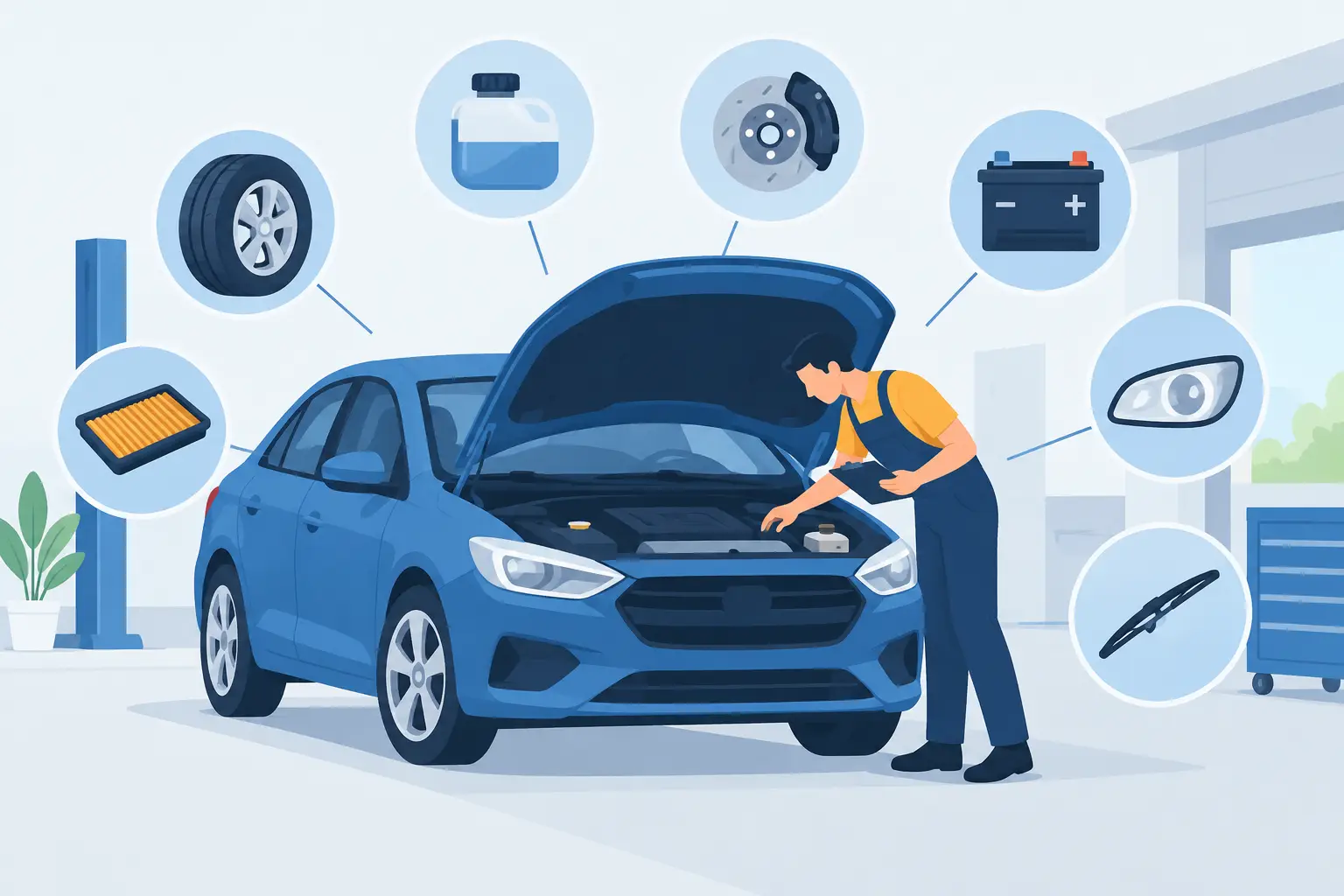
For a useful final check, focus on these five areas:
- All lights, including indicators, brake lights and number plate lights
- Tyre tread, tyre condition and wheel security
- Wipers, washers, windscreen and mirrors
- Dashboard warning lights, horn, seat belts and doors
- Number plates, visible leaks and fluid levels
Give your car a proper run before the MOT
If your car has mostly done short journeys, take it for a normal drive before the test, provided it is safe to do so. This is particularly helpful for diesel vehicles, which can struggle with emissions if the engine and exhaust system have not had the chance to reach full operating temperature.
Avoid turning up with the fuel warning light on if you can. The tester may need to run the engine for emissions checks, and a very low fuel level can cause practical issues. There is no need to overfill the tank, but enough fuel for the journey and test is sensible.
Bring locking wheel nut keys if your vehicle uses them. They are not always needed for an MOT, but keeping them in the car avoids a delay if a wheel needs to be removed for related repair work later. If the car has been off the road for a while, check the battery is healthy and that it starts reliably.
What to do if you find a problem
Some issues are simple to sort yourself, such as topping up screenwash or replacing a straightforward bulb. Others need a trained technician, particularly brake concerns, warning lights, steering issues, leaks and tyre damage. The cheapest answer is not always to wait for a fail, as driving with certain faults may be unsafe or illegal.
At Kingshill Autos, we believe an MOT should not feel like a mystery. If you are concerned about something before your test, asking for clear advice first can help you understand what needs doing, what can wait and what it is likely to cost. Honest preparation is the best way to arrive at your MOT feeling confident rather than worried.