That MOT reminder can feel like one more job to fit around work, school runs and everyday life. But MOT testing need not be stressful when you know what the test covers, what you can check at home and what a result actually means for your car.
For most drivers, an MOT is a yearly check that confirms a vehicle meets the minimum legal standards for road safety and environmental performance. It is not designed to catch every possible mechanical issue, and it does not replace regular servicing. Think of it as an essential safety inspection, carried out by an approved tester, rather than a full health check for your vehicle.
When is your MOT due?
Cars, vans and most other light vehicles need their first MOT when they are three years old, then every year after that. The expiry date is shown on your current MOT certificate and can also be checked using the vehicle registration number through the official MOT history service.
You can have the test carried out up to one month, minus a day, before the current certificate expires while keeping the same renewal date. For example, if your MOT runs out on 20 June, you can normally book from 21 May without bringing next year’s expiry date forward. This is useful if you would rather deal with repairs before the deadline than risk being left without a valid MOT.
If the MOT has expired, you can usually drive to a pre-booked MOT appointment, or to repairs needed following a failed test. The vehicle must still be roadworthy. Driving a car with known dangerous faults is never a sensible gamble, even if you are only travelling a short distance.
What does MOT testing check?
MOT testing focuses on the parts of your car that affect safe driving, visibility and emissions. The tester follows a set inspection standard, so the result is based on the vehicle’s condition on the day, not guesswork or sales targets.
Safety items that matter most
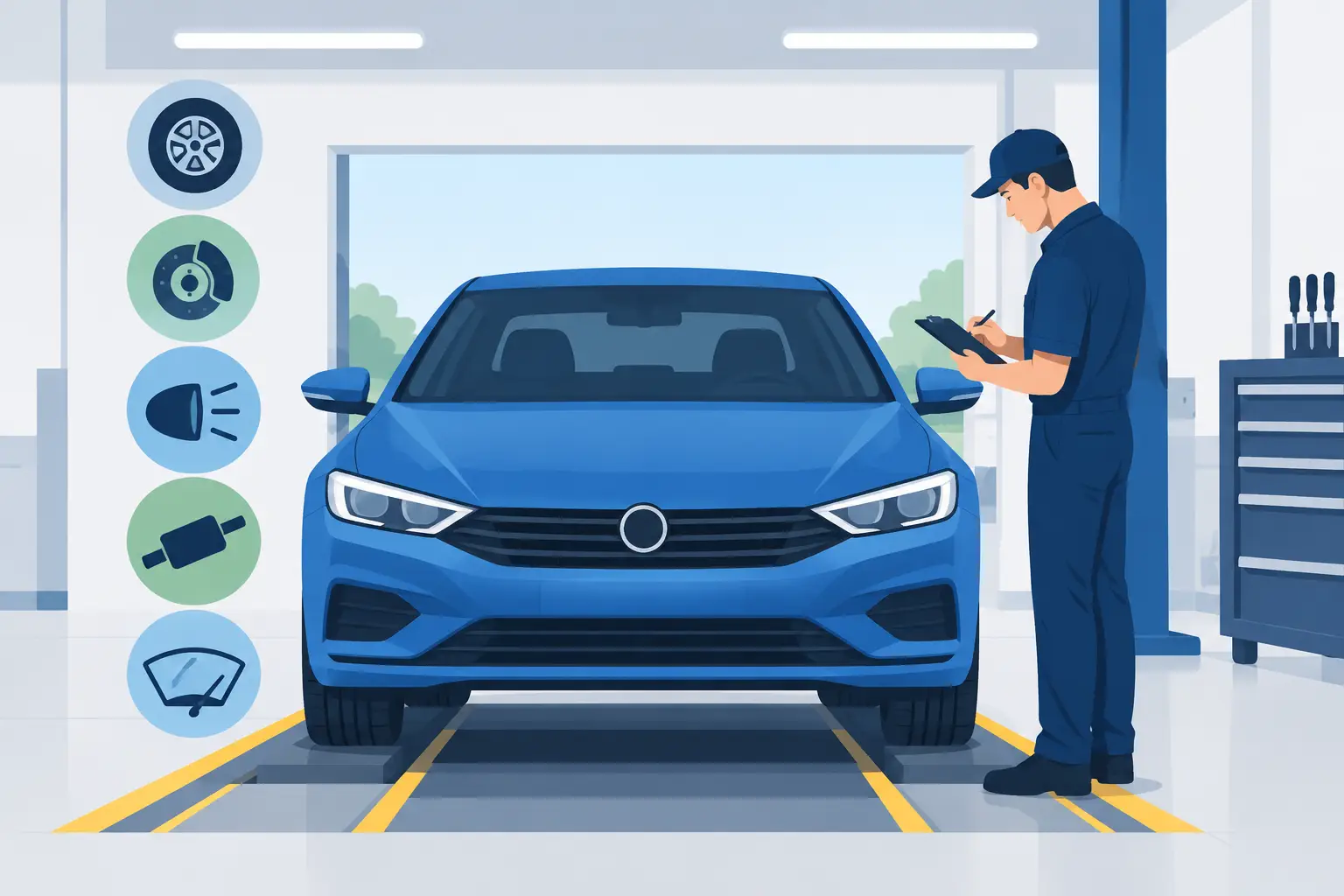
The test includes the brakes, steering, suspension, tyres, wheels, seat belts, lights, mirrors, horn and wipers. The tester will also look at the condition of the bodywork and structure where corrosion could weaken an important area, such as around a suspension mounting or seat belt anchorage.
Tyres are a common reason for failure. They must have enough tread across the central section and be free from serious cuts, bulges or exposed cords. A tyre can look acceptable at a quick glance but still be worn unevenly, particularly if wheel alignment or suspension components need attention.
Lights are another straightforward but frequent issue. Headlamps, indicators, brake lights, rear lights and number plate lamps all need to work properly and show the right colour. A blown bulb may be a small repair, but it can still prevent a pass.
Visibility, warning lights and emissions
Your windscreen must give you a clear view of the road. Damage in the driver’s main viewing area may cause a problem, as can worn wiper blades that smear rather than clear the glass. The tester will also check that screenwash is available and that the washers work.
Dashboard warning lights are assessed too. Depending on the vehicle, an illuminated engine management, airbag, ABS or brake warning light could lead to a failure. Do not ignore a warning light simply because the car seems to drive normally. Diagnostics can identify the underlying fault before it becomes more expensive or causes an MOT problem.
The emissions check measures exhaust gases on petrol cars and smoke levels on diesel vehicles, using the standards that apply to the vehicle’s age and type. A vehicle that has only been used for very short journeys may benefit from a proper run before its appointment, provided it is safe and legal to drive. That said, a warning light, poor running or excessive smoke needs investigation rather than a hopeful longer journey.
What an MOT does not tell you
A passed MOT is reassuring, but it is not proof that every part of the car is in perfect condition. The test does not examine the engine’s internal condition, clutch wear, timing belt condition, oil quality or the general state of every service item.
For example, a clutch may be starting to slip but still not affect the MOT result. A timing belt can be approaching its replacement interval without being visible during the test. Servicing is where these maintenance needs are considered in line with your vehicle’s age, mileage and manufacturer’s schedule.
This distinction matters because waiting for an MOT to reveal every issue can lead to avoidable breakdowns. A regular service alongside annual testing gives you a more complete picture and helps you plan work before it becomes urgent.
Simple checks before your MOT
A few minutes at home can prevent a wasted appointment and save you from a small, avoidable failure. Walk around the vehicle with someone operating the lights if possible, and check the headlights, indicators, brake lights and number plate lamps. Make sure the horn works, the windscreen washers spray properly and there is enough screenwash in the reservoir.
Look at the tyres for visible damage and check the tread. If you have a tyre pressure gauge, use it, especially before a long journey to the garage. Also remove anything that could obstruct the driver’s view, such as loose stickers in the windscreen area.
Inside the car, make sure both front seat belts pull out and clip in securely. If a warning light stays on after the engine starts, arrange for it to be checked rather than hoping it will disappear before the test. These basic checks are not a substitute for professional inspection, but they deal with the easy faults that catch many drivers out.
What happens if your car fails?
An MOT failure does not automatically mean your car is beyond repair. The result will explain the defects found and class them according to their seriousness. Minor defects are recorded but do not stop the vehicle passing. Major defects cause a failure and need repair before a valid certificate can be issued. Dangerous defects mean the car should not be driven until the issue is put right.
You may also see advisories on a pass certificate. These are items that are not yet serious enough to fail but may need attention soon, such as tyres wearing close to the limit, slight corrosion or a component showing early wear. Advisories are useful planning information, not a reason to panic. Ask which items need attention now, which can wait and what signs to watch for.
Before agreeing to repairs, you should receive a clear explanation of what has failed, why it matters and what the work is likely to cost. A trustworthy local garage will not bury you in jargon or pressure you into unrelated jobs. At Kingshill Autos, the aim is to explain the options plainly, provide an honest quote and carry out only the work your vehicle genuinely needs.
Retest arrangements depend on where the repairs are completed, the type of defects involved and how quickly the vehicle returns to the testing station. It is worth asking about this before taking the car away, as repairing it promptly may make the process simpler and reduce the cost of getting back on the road.
Booking MOT testing without the last-minute rush
Booking early gives you more choice of appointment times and more breathing room if repairs are needed. This is particularly helpful for commuters and families who rely on one car every day. An early booking also lets you combine the MOT with a service where that suits the vehicle’s maintenance schedule, although the two remain separate checks.
Bring your car in with any concerns you have noticed, even if they seem minor: a squeal when braking, a vibration through the steering wheel, a persistent warning light or tyres that keep losing pressure. Sharing that information helps the garage advise you properly and may prevent a small concern becoming a bigger interruption to your week.
The best approach is simple: keep an eye on the expiry date, carry out the basic checks you can do safely and choose a garage that will talk you through the result clearly. A well-timed MOT is not just a legal task to tick off – it is a practical chance to keep the car you depend on safe, reliable and ready for the road.