
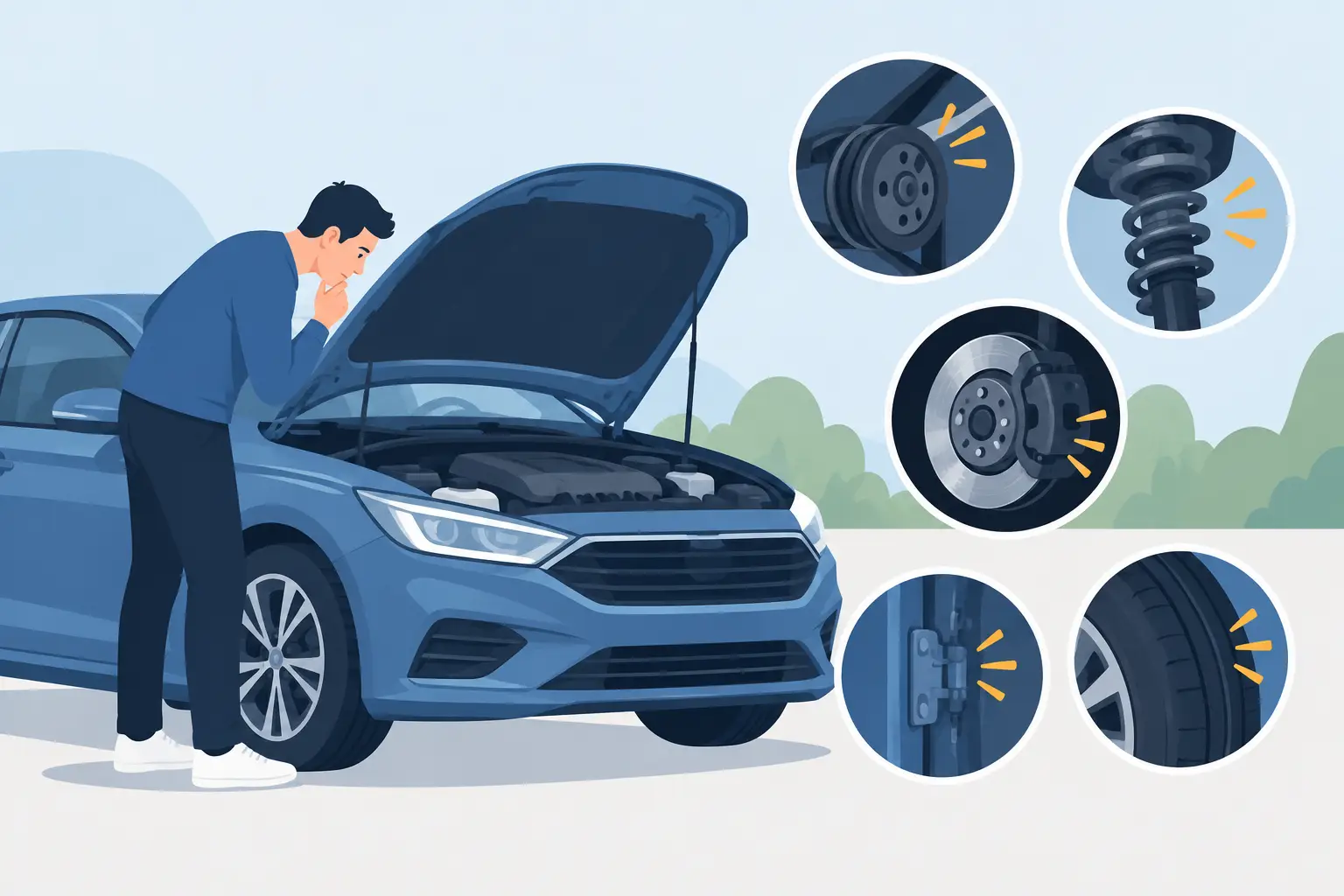
A squeak can be easy to ignore at first. Perhaps it only happens as you reverse off the drive, when you brake at a roundabout, or after the car has been parked overnight. But if you are asking, “why is my car squeaking?”, the sound is worth paying attention to. Some causes are harmless and short-lived, while others are an early warning that a safety-critical part needs checking.
The key is not to guess based on the noise alone. Where it comes from, when it happens and whether anything else has changed in the way the car drives all help identify the cause. A professional inspection can often find the problem before a minor repair turns into unnecessary expense.
Why is my car squeaking when I drive?
A squeak while driving commonly comes from the brakes, suspension, tyres or an engine-driven belt. The timing matters. A noise that appears only when braking points in a different direction to one that occurs over speed bumps or when turning the steering wheel.
Weather can also play a part. Damp conditions may leave a light surface layer on brake discs after the car has been standing. This often causes a brief squeak on the first few brake applications, then disappears once the discs have warmed and cleared. That is usually not a concern if braking feels normal and the noise does not persist.
A squeak that continues every journey, becomes louder, or is joined by vibration, pulling to one side or a warning light deserves a closer look. Cars are built with many moving parts, and a small change in sound can be the first sign that something is wearing, loose or contaminated.
Squeaking brakes are one of the most common causes
Brake squeal is particularly common because pads and discs operate under heat, pressure and road dirt. Modern brake pads can make some noise without there being an immediate fault, especially when they are cold. However, persistent noise should never be dismissed simply because the car still stops.
Worn brake pads or discs
Many brake pads include a wear indicator designed to make a high-pitched noise as the friction material becomes low. It is a useful warning, but it means the pads should be inspected soon. Leaving worn pads too long can damage the brake discs, increasing the cost of the repair.
Discs can also develop a lip around the edge as they wear, or become uneven through age and heat. You may notice squeaking along with a pulsing feeling through the brake pedal or steering wheel when slowing down. The right repair depends on the condition of both pads and discs, not on replacing parts unnecessarily.
Dust, moisture or a sticking brake component
Brake dust, grit and moisture can cause squealing even where there is plenty of pad material left. A garage can clean and inspect the components, check that the pads move freely in their carriers, and make sure the caliper is not sticking.
A sticking caliper may cause one wheel to get unusually hot, the car to pull under braking or a burning smell after a journey. Those signs should be dealt with promptly. Continuing to drive can wear a pad down rapidly and affect braking performance.
Squeaking over bumps or when turning
If the squeak appears on rough roads, over speed humps or as you turn into a parking space, it may be coming from the suspension or steering. These parts keep the tyres in contact with the road and make the car stable, so they matter far beyond comfort.
Rubber bushes, anti-roll bar links and suspension mounts can dry out, crack or wear over time. They may squeak as the suspension moves, particularly at low speed. A worn component does not always make the car feel dramatically different straight away, which is why an inspection is useful.
A squeak while turning the steering wheel can also be linked to suspension joints, steering components or, on some cars, the auxiliary drive belt. If steering feels heavy, jerky or less precise than normal, avoid putting it off. The cause could be straightforward, but the steering system is not an area for trial and error.
Could a belt be causing the squeak?
A sharp squeal from under the bonnet, particularly when starting the engine, accelerating or switching on the air conditioning, can be caused by an auxiliary belt. This belt drives items such as the alternator, water pump or power steering system, depending on the vehicle.
Belts can squeak when they are worn, glazed, loose or contaminated by oil or coolant. A faulty tensioner or pulley can create a similar sound. Although it may begin as an occasional noise, a belt that slips or fails can leave you with a flat battery, overheating issues or loss of assistance to certain systems.
It is worth distinguishing the auxiliary belt from the timing belt or wet belt. Timing belt and wet belt replacement follows manufacturer intervals and is vital engine maintenance, but these belts do not usually announce themselves with a simple squeak. Any unusual engine noise still needs proper diagnosis rather than assumption, as using the wrong part or delaying a repair can have serious consequences.
Other noises that can sound like a squeak
Not every squeak is a mechanical failure. A loose number plate, worn wiper blade, dry door seal or item moving in the boot can all create irritating noises. Tyres can also squeal if they lose grip during a tight turn, hard braking or quick acceleration.
That said, regular tyre squeal during normal driving is worth checking. Incorrect tyre pressures, uneven wear or wheel alignment issues can affect grip and tyre life. If the steering wheel is off-centre, the car drifts on a level road, or the tyres are wearing more on one edge, book an inspection.
Interior noises can be difficult to trace because sound travels through the car. A technician will usually road-test the vehicle where appropriate, then inspect likely areas rather than replacing parts based on a description alone. Clear diagnosis is the best way to avoid paying for work that does not solve the problem.
When should you stop driving and get help?
A light squeak that disappears after the first few brake applications may be monitored, but some combinations of symptoms call for urgent attention. Do not continue driving as normal if you notice any of the following:
- A grinding, scraping or metal-on-metal noise when braking
- A brake warning light, soft brake pedal or reduced stopping power
- The vehicle pulling sharply to one side, severe vibration or heavy steering
- Smoke, a burning smell, or a wheel that feels excessively hot
- A loud belt squeal with an engine temperature warning light or battery light
If you are uncertain, it is safer to arrange a check than to take a chance. Brakes, steering and suspension are not areas where a noise should be ignored in the hope that it goes away.
What to tell your garage about the squeak
A few details can make diagnosis quicker and more accurate. Try to note whether the squeak happens when braking, turning, going over bumps, starting the engine or travelling at a particular speed. Mention if it occurs only in wet weather, after the car has been standing, or once the engine is warm.
It also helps to say where you think the sound is coming from, even if you are not certain: front or rear, left or right, inside the cabin or under the bonnet. Tell the garage about any recent work, warning lights, changes in handling or knocks that have appeared at the same time.
At Kingshill Autos, the aim is to explain what has been found in plain English, provide an honest quote and carry out only the work your car needs. Whether the answer is a simple brake clean, replacement pads and discs, a suspension repair or a belt issue, understanding the cause puts you in control.
A squeak is your car’s way of asking for attention, not necessarily a sign of the worst-case scenario. Getting it checked early is often the calmest, safest and most affordable next step.


