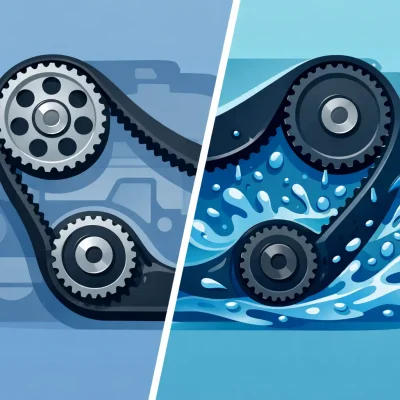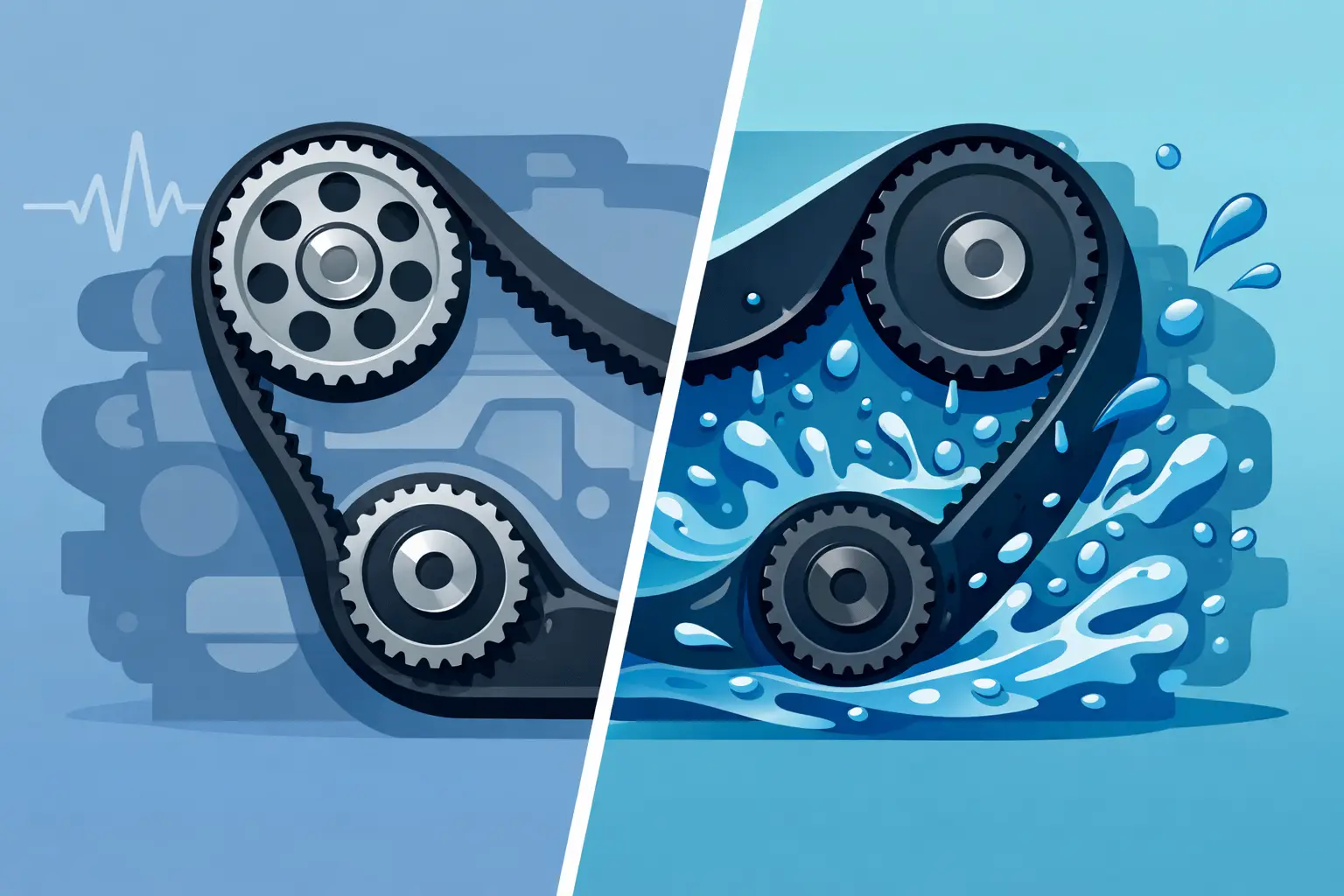
A lot of drivers only hear about this when a garage mentions a replacement bill, and by then the question becomes urgent. When it comes to timing belt vs wet belt, the difference matters because it affects how your engine is designed, how it wears over time, and how seriously you need to take the service interval.
If you are not especially car-minded, that is completely fair. Most people just want to know what their car has, why it matters, and whether they are at risk of a costly failure. That is exactly where a clear explanation helps.
Timing belt vs wet belt: the basic difference
A traditional timing belt is a toothed rubber belt that runs outside the engine’s lubricated internals, behind protective covers. Its job is to keep the crankshaft and camshaft moving in sync so the engine valves open and close at the right time.
A wet belt does the same core job, but it runs inside the engine and is lubricated by engine oil. That is why it is called a wet belt. On paper, this design can reduce noise and friction, and it can help with efficiency. In real life, it also introduces a different set of maintenance concerns.
That is the key point in the timing belt vs wet belt comparison. Both control engine timing, but they live in different environments. One stays dry and separate from the oil system. The other depends on clean oil and the correct servicing history to survive.
Why wet belts have become such a talking point
Wet belts have attracted attention because some engines have suffered belt deterioration earlier than owners expected. When a wet belt begins to break down, small particles of belt material can contaminate the engine oil. That can lead to bigger issues than just the belt itself.
In some cases, the debris can affect oil pick-up systems and lubrication. If the engine is not getting the oil flow it needs, damage can follow quickly. So while both a dry timing belt and a wet belt can fail, the knock-on effects of a failing wet belt can be especially serious.
This does not mean every wet belt engine is a problem waiting to happen. It does mean the service interval, oil quality and correct specification matter a great deal. Skipping services or using the wrong oil is more than a paperwork issue with this type of system.
How each system wears over time
A standard timing belt usually ages through mileage, heat and time. Rubber hardens, teeth wear, and the belt can crack or weaken. That is why manufacturers set replacement intervals based on years, miles, or both.
A wet belt still ages, but it also has to cope with constant exposure to engine oil. If the oil degrades, becomes contaminated, or is not the exact type the engine requires, belt material can deteriorate faster than intended. So the health of the belt is tied closely to the health of the engine oil.
That makes maintenance slightly less forgiving. With a conventional timing belt, missed servicing is never ideal, but with a wet belt system, poor servicing can be particularly damaging.
Which is better?
There is no simple winner in timing belt vs wet belt. It depends on the engine design, how well the car has been maintained, and whether the replacement schedule is followed properly.
A traditional timing belt is often easier for drivers to understand. It has a set interval, it sits outside the oil system, and replacement is a familiar job on many cars. A wet belt can offer engineering benefits, but it leaves less room for neglect. If the vehicle has been serviced on time with the correct oil, it may give good service. If not, the risks can rise sharply.
For everyday motorists, “better” usually means easier to live with and less risky to ignore by mistake. On that basis, many drivers feel more comfortable with a conventional timing belt. But the right approach is not to worry about what the car should have had. It is to find out what your car actually has and maintain it properly.
How do you know if your car has a wet belt?
The easiest answer is to check the manufacturer information or ask a trusted garage to confirm it. Many owners do not know until they book a service or ask about the timing system.
Some engines are well known for wet belt setups, but you should not rely on hearsay or online guesswork. Even within the same make, different engine sizes or model years can use different systems. Getting it confirmed from the registration and vehicle details is the safest route.
If you have recently bought a used car and there is no clear evidence of timing belt or wet belt replacement, it is worth checking sooner rather than later. That is especially true if the mileage is climbing or the service history is incomplete.
Warning signs are not always reliable
One of the hardest things for drivers is that timing belts and wet belts do not always give clear warning signs before failure. Sometimes there may be rattling, poor running, oil pressure warnings, or bits of belt material found during inspection. Sometimes there is no obvious symptom at all until damage has already happened.
That is why these are preventative maintenance items, not wait-until-it-breaks parts. If a timing belt snaps, or a wet belt breaks down badly enough to affect engine timing or oil supply, the repair can move from routine maintenance into major engine work.
This is where honest advice matters. A good garage should be able to explain whether you are working to a time-based interval, a mileage-based interval, or whether there are inspection concerns that mean earlier action is sensible.
Replacement costs and why they vary
Drivers often ask whether a wet belt is more expensive than a timing belt. In many cases, yes, it can be. Wet belt replacement is often a more involved job because of where the belt sits in the engine and what has to be removed to access it.
The final cost depends on the make and model, the labour involved, and whether other parts should be replaced at the same time. With a conventional timing belt, it is common to replace related components such as tensioners and sometimes the water pump, depending on the engine. With a wet belt, there may also be extra cleaning and inspection work needed if belt degradation is suspected.
This is one reason transparent pricing matters. No one likes surprise bills, especially when the repair is already a sizeable one. If the job is due, it is far better to know the cost upfront than to gamble on stretching the interval and risking engine damage.
Servicing matters even more with a wet belt
If your car has a wet belt, regular servicing is not just about keeping the stamp book tidy. The oil and filter changes need to be done on time and with the correct oil specification.
That exact specification matters because the wrong oil can affect belt material and engine protection. A cheap shortcut during servicing can become an expensive problem later. For cost-conscious drivers, that can feel frustrating, but it is still cheaper than dealing with a failed belt or a damaged engine.
This is also why used car buyers need to be cautious. A car may look tidy and drive well, but if the service history is patchy or the wrong oil has been used, the wet belt may have had a harder life than it appears.
When should you replace it?
There is no universal figure because replacement intervals vary by manufacturer and engine. Some are based on mileage, some on age, and some need earlier attention if there are known issues or poor service history.
The safest approach is simple. Do not guess, do not rely on “it will probably be fine”, and do not assume no noise means no problem. Check the schedule for your exact vehicle and treat it as a priority item.
If the history is unknown, many drivers choose peace of mind and have it replaced rather than take the risk. That is often the sensible choice with a used car, especially if you plan to keep it.
The practical takeaway for local drivers
For most people, timing belt vs wet belt comes down to this: a timing belt is usually more familiar and straightforward, while a wet belt needs especially careful servicing and should never be neglected. Neither system is something to ignore, but wet belts can be less forgiving when maintenance has been missed.
If you are unsure what your vehicle has, ask. If the interval is approaching, plan ahead. And if you have bought a used car with vague paperwork, checking now could save you a very expensive headache later.
At Kingshill Autos, we see plenty of motorists who simply want a straight answer, fair pricing and work done properly the first time. That is exactly the right attitude with timing systems. A little clarity now is far better than a recovery lorry and a damaged engine later.