That warning light on the dashboard rarely appears at a convenient time. You might be on the school run, heading to work, or getting ready for a weekend trip when suddenly you are asking, what does engine diagnostic check mean, and do I need to deal with it straight away?
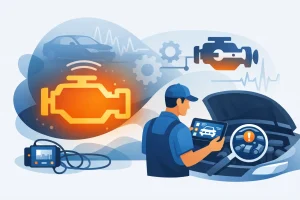
In simple terms, an engine diagnostic check is a way for a garage to read fault codes stored by your car’s onboard computer. Modern vehicles constantly monitor key systems such as the engine, emissions, fuel delivery, ignition and sensors. When something is not working as it should, the car records that issue. A diagnostic check helps a technician see where the fault may be coming from, so the problem can be identified properly rather than guessed.
What does engine diagnostic check actually do?
A lot of drivers hear the phrase and imagine a machine that instantly tells the mechanic exactly what is broken. It is not quite that simple. A diagnostic check is a very useful starting point, but it is still part of a wider inspection.
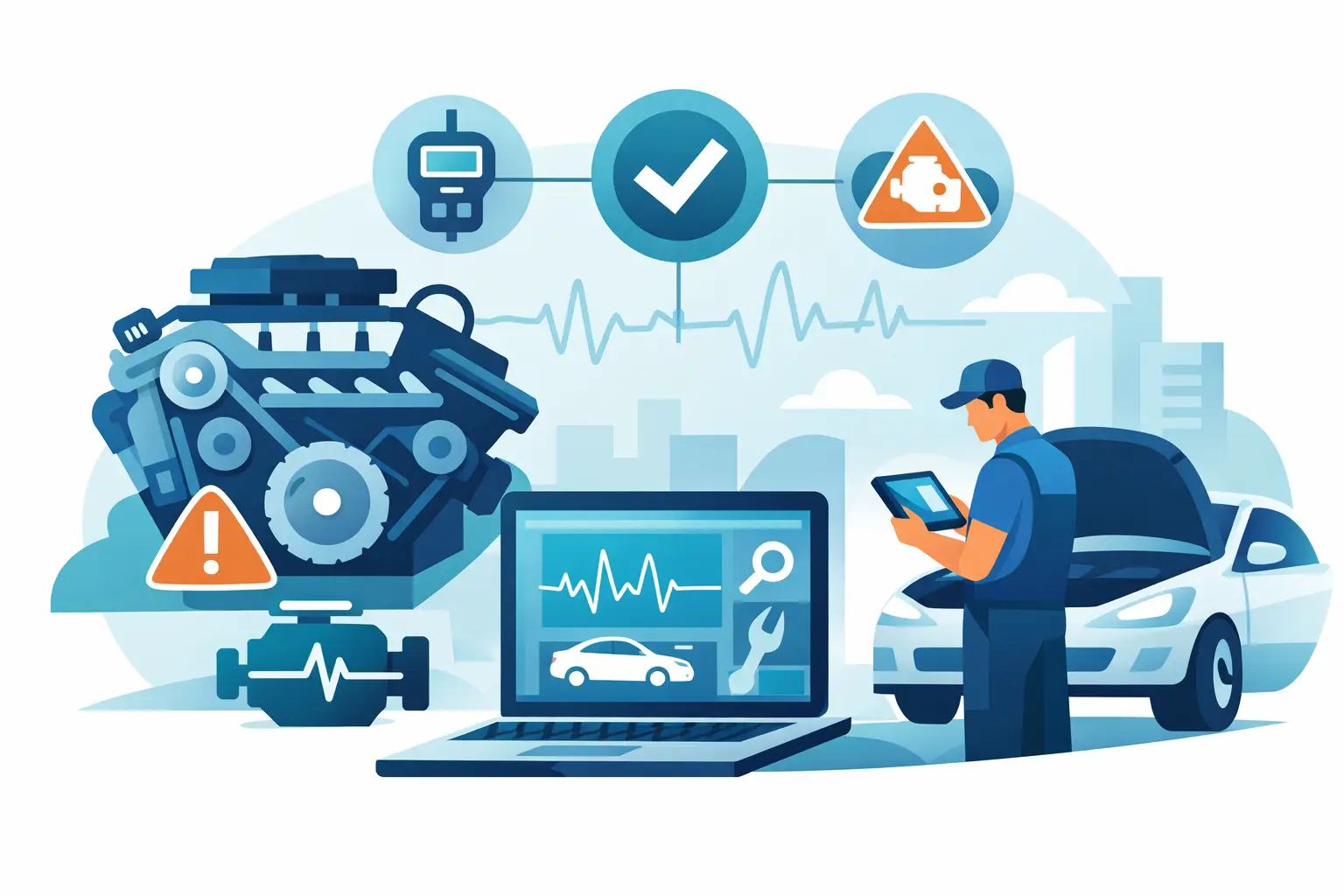
The process usually involves connecting a diagnostic tool to your vehicle’s onboard system, often through the OBD port. This allows the technician to read stored trouble codes, check live data from sensors, and see whether any systems are reporting faults. Depending on the car and the fault, it can also show intermittent issues that have not fully developed into a major breakdown yet.
That matters because many faults can cause similar symptoms. A car that is hesitating, struggling to start or using too much fuel could have a sensor issue, an ignition fault, a fuel system problem, or something mechanical. The diagnostic check points the technician in the right direction, which saves time and reduces the chance of replacing parts that were never the problem.
What an engine diagnostic check can reveal
An engine diagnostic check can uncover a wide range of issues, from minor faults to more serious concerns. Common examples include faulty oxygen sensors, misfires, EGR valve problems, mass airflow sensor faults, emissions issues and catalytic converter warnings. It can also pick up problems linked to the throttle, turbo system, glow plugs on diesel vehicles, and other electronic controls.
Sometimes the issue is relatively small. A loose connection, ageing sensor or weak ignition coil can trigger a warning light but be straightforward to put right. In other cases, the fault code is only the symptom, not the root cause. For example, a code may suggest an air-fuel imbalance, but the real problem might be an air leak, injector fault or failing component elsewhere in the system.
This is why a proper garage will not simply plug in a scanner, print off a code and call it a diagnosis. The code needs to be interpreted by someone who understands how the system works in real-world conditions.
What does engine diagnostic check not do?
It is just as helpful to know what a diagnostic check cannot do. It does not replace a full mechanical inspection, and it does not mean every possible fault will show up on the machine.
Some problems are mechanical rather than electronic. Worn timing components, clutch wear, suspension knocks and certain oil leaks may not trigger a code at all. Equally, if a fault is only happening occasionally, the system may not always store enough information to give a complete answer first time.
There is also the matter of interpretation. One fault code can sometimes be caused by several different issues. A reading might point to a faulty sensor, but the sensor may actually be working correctly and reacting to another hidden fault. That is where experience matters.
Signs you may need an engine diagnostic check
The most obvious sign is the check engine light or engine management light appearing on the dashboard. If that light comes on and stays on, it is worth getting the car checked as soon as you can.
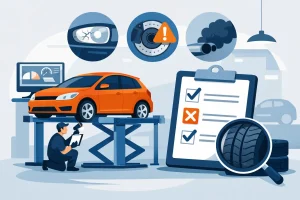
Other signs can include poor fuel economy, rough idling, sluggish acceleration, difficulty starting, stalling, unusual smoke from the exhaust, or the engine going into limp mode. Even if the car still feels driveable, these symptoms should not be ignored. Problems that start small can become more expensive if left too long.
There are times when the issue feels minor but still deserves attention. If the warning light comes on and then disappears, for example, the fault may be intermittent. The vehicle may still have stored information that helps trace the cause before it becomes a bigger inconvenience.
How long does an engine diagnostic check take?
The basic scan itself is usually quick. In many cases, connecting the equipment and reading the codes only takes a short time. What can take longer is the follow-up investigation.
If the codes clearly point to a straightforward fault, the next steps may be simple. If the results are less clear, the technician may need to test components, inspect wiring, or check for related issues before confirming what repair is actually needed. That extra time is often what prevents wasted money.
For drivers, this is often the frustrating bit. It is natural to want a fast answer and a fixed price immediately. Sometimes that is possible. Sometimes a careful diagnosis is the only honest way to avoid paying for guesswork.
Is it safe to keep driving?
It depends on what the car is doing. If the engine warning light is on but the car seems to be running normally, you may still be able to drive it cautiously for a short period. Even then, it is sensible to book it in soon.
If the light is flashing, the car is misfiring, there is a loss of power, or you notice unusual noises, smoke or strong smells, it is better not to keep driving unless absolutely necessary. Continuing to use the car in that condition can sometimes cause further damage, especially to emissions components or the engine itself.
When in doubt, ask a professional before setting off on a longer journey.
What happens after the engine diagnostic check?
Once the fault codes and test results have been reviewed, the garage should explain what has been found in plain English. That should include whether the code points to a confirmed failure, whether further investigation is needed, and what the likely repair options are.
A good garage will also be clear about cost. Some faults have an obvious fix and can be quoted quickly. Others need a bit more testing before anyone can fairly say what parts or labour will be required. Honest advice matters here. No one wants to be told they need several expensive parts when the real issue has not yet been confirmed.
At Kingshill Autos, that clear explanation is exactly what local drivers tend to value most. For many people, the biggest worry is not just the fault itself but whether they will be given a straight answer.
Why diagnostic checks are worth it
For some motorists, the phrase sounds like an extra charge rather than a useful service. In reality, a proper diagnostic check can save money. It helps avoid replacing parts based on hunches and reduces the risk of small issues turning into larger repairs.
It can also bring peace of mind. If your vehicle feels different but you cannot pinpoint why, a diagnostic check gives a trained technician somewhere solid to begin. That is especially useful with modern cars, where electronics control far more than many drivers realise.
There is a trade-off, though. The cheapest diagnostic service is not always the best one. A quick code read with no real interpretation may leave you with more questions than answers. What you want is a proper assessment from a garage that will tell you what the code means, what it does not mean, and what should happen next.
What does engine diagnostic check mean for everyday drivers?
For most people, it means getting clarity. It is the process that helps turn a warning light, strange symptom or nagging concern into something understandable and fixable.
You do not need to know the technical side of every sensor, module or system. What matters is knowing when to have the car looked at and choosing a garage that explains things clearly. An engine diagnostic check is not magic, but it is one of the most useful tools for finding faults quickly and accurately.
If your car is trying to tell you something, it is usually cheaper and less stressful to listen sooner rather than later.