A warning light appearing on the dashboard can turn an ordinary journey into a worry. An OBD scanner review UK drivers can trust should not promise miracles: a scanner can point you towards a fault, but it cannot always tell you exactly which part needs replacing. Used sensibly, though, it is a useful way to understand what your car is reporting before deciding whether it needs attention at a garage.
OBD scanner review UK: the short answer
For most everyday motorists, a basic OBD2 code reader or a reputable Bluetooth scanner is enough. It should read and clear engine fault codes, show a plain-English explanation where possible, and display live data such as coolant temperature and engine speed. There is little value in paying for a highly specialised professional tool if you only want to check the cause of an occasional engine management light.
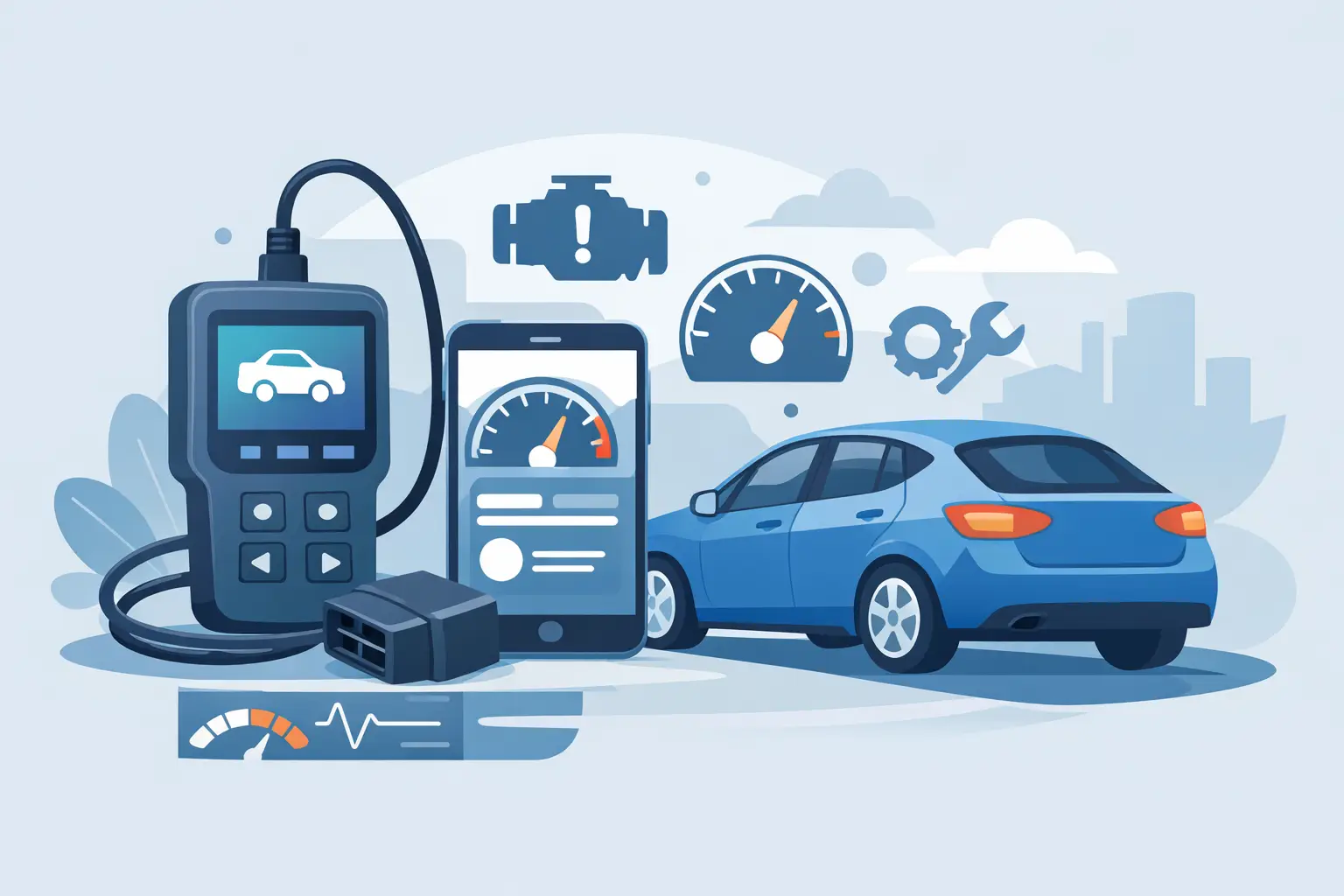
The better choice depends on your car and what you want to do. A simple handheld reader is straightforward and does not rely on a phone signal, app subscription or Bluetooth connection. A Bluetooth scanner can be more convenient and may offer clearer reports, but the quality of the app matters just as much as the small device plugged into the car.
If you are buying one because a warning light is on now, read the code first but do not clear it immediately. The stored information can help a technician diagnose the problem properly, especially if the light returns.
What an OBD scanner can and cannot do
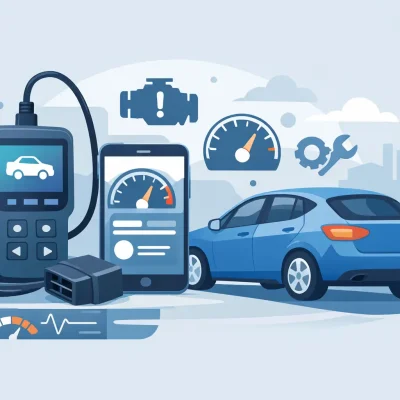
OBD stands for On-Board Diagnostics. Most petrol cars sold in the UK from 2001 and diesel cars from 2004 have a standard OBD2 diagnostic socket, usually beneath the dashboard near the steering wheel. Plugging in a compatible scanner allows it to communicate with the vehicle’s control units.
At its most useful, a scanner can retrieve a diagnostic trouble code. For example, it may indicate an issue related to an oxygen sensor, misfire, exhaust emissions or airflow. It can also show whether a code is current, stored or pending. That is valuable information, but a code is a starting point, not a final verdict.
A code referring to an oxygen sensor does not automatically mean the sensor has failed. The underlying cause could be damaged wiring, an air leak, a fuel issue or a problem elsewhere in the exhaust system. Replacing parts based on a code alone can become expensive very quickly.
Most low-cost readers concentrate on engine and emissions faults. They may not access more vehicle-specific systems such as ABS, airbags, electric parking brakes, battery management or gearbox faults. Those functions often require a scanner designed for a particular manufacturer, or professional diagnostic equipment with the right software.
The features worth paying for
Price is not the only measure of a good scanner. A cheap unit that reliably reads generic codes is often more useful than one advertising dozens of functions it cannot perform on your vehicle. Before buying, check that it supports your car’s make, model, engine and year.
Look for these practical features if they suit how you will use it:
- Clear code descriptions, rather than a number with no explanation.
- Live data, which can help show whether the engine is warming up normally or whether sensor readings look unusual.
- The ability to read pending codes and freeze-frame data, which records conditions when a fault occurred.
- Regular app or software updates, particularly for Bluetooth scanners.
- Manufacturer-specific coverage if you need access to service functions, ABS or airbag systems.
For a household with one or two cars, a basic reader with live data is usually the sensible middle ground. For someone maintaining several cars, or a keen DIY owner who understands how to interpret readings, a more capable scanner may justify its higher price.
Be cautious with devices that advertise free functions but then require ongoing payments within an app. There is nothing wrong with a subscription if it provides useful manufacturer coverage and updates, but it should be clear before you buy. Hidden costs are frustrating whether you are booking a repair or choosing a diagnostic tool.
Handheld reader or Bluetooth scanner?
A handheld reader is the simpler option. Plug it in, switch on the ignition and follow the prompts on its own screen. It is a good choice for drivers who prefer not to use an app or who simply want a dependable way to check an engine light. It can also be easier to keep in the glovebox, although it is best not to leave any scanner connected while driving unless the manufacturer says it is safe to do so.
Bluetooth scanners are small, often inexpensive and work through a smartphone app. Their main advantage is the screen you already own: reports can be easier to read, and some apps can record journey data or explain common codes. The drawback is compatibility. A scanner may connect perfectly but offer limited information if the app does not support your vehicle properly.
There is also a practical security point. Buy from a recognised supplier, use a well-reviewed app and disconnect the device after use. Very cheap, unknown devices can be unreliable, while poorly supported apps may ask for unnecessary permissions or stop receiving updates.
Will a scanner help with an MOT failure?
It can help you understand why the engine management light is on, but it will not make a fault disappear. If the malfunction indicator lamp is illuminated, it can result in an MOT failure. Clearing the code may turn the light off temporarily, but if the problem remains, the car’s system will usually detect it again. It may also leave the vehicle’s emissions readiness checks incomplete, which can create another issue at test time.
The right approach is to read the code, note it down and consider how the car is behaving. Is it misfiring, lacking power, using more fuel, smoking, overheating or making an unfamiliar noise? If so, avoid unnecessary driving and arrange a proper inspection. A flashing engine management light is more urgent, as it can indicate a misfire severe enough to damage the catalytic converter.
Even when the car feels normal, do not assume the warning is harmless. Some faults affect emissions or fuel economy long before they cause an obvious drivability problem.
How to use an OBD scanner without creating more work
Start with the engine off and locate the diagnostic port. Plug in the reader, turn the ignition on and allow the device or app to connect. Read every code, including pending codes, and take a screenshot or write down the code numbers before clearing anything.
Next, use the scanner’s explanation as a clue, not an instruction to buy a part. Search for the code only if you are comfortable doing so, and keep in mind that different vehicles can have different causes for the same generic code. Look for simple, visible issues only where it is safe to do so, such as a loose fuel filler cap or obvious damage to an accessible connector. Do not work around hot components, moving belts or electrical systems unless you know what you are doing.
If you decide to clear a code after recording it, monitor the vehicle over the next few journeys. A fault that returns quickly deserves professional attention. A fault that does not return may still need watching, particularly if it appeared alongside rough running or poor fuel economy.
When professional diagnostics are the better value
An OBD scanner is excellent for giving you more information, but it cannot replace testing. A trained technician can use manufacturer-level equipment, inspect live readings in context, test circuits and components, and check for mechanical causes that a generic code reader cannot see.
Professional diagnostics are especially worthwhile for repeated warning lights, intermittent faults, ABS or airbag lights, starting problems, gearbox concerns and faults following a repair. They are also the sensible route when a car is due for its MOT and you want the real cause fixed rather than the light briefly erased.
At Kingshill Autos, we explain diagnostic findings in plain language and discuss the next sensible step before work goes ahead. That means you can use your own scanner as a helpful first check, while still getting the right test when the answer is not straightforward.
A scanner is best kept as a useful torch, not treated as a full workshop. If a warning light stays on, the car feels different or an MOT is approaching, keeping the code information and having it checked properly can save wasted money and a bigger repair later.