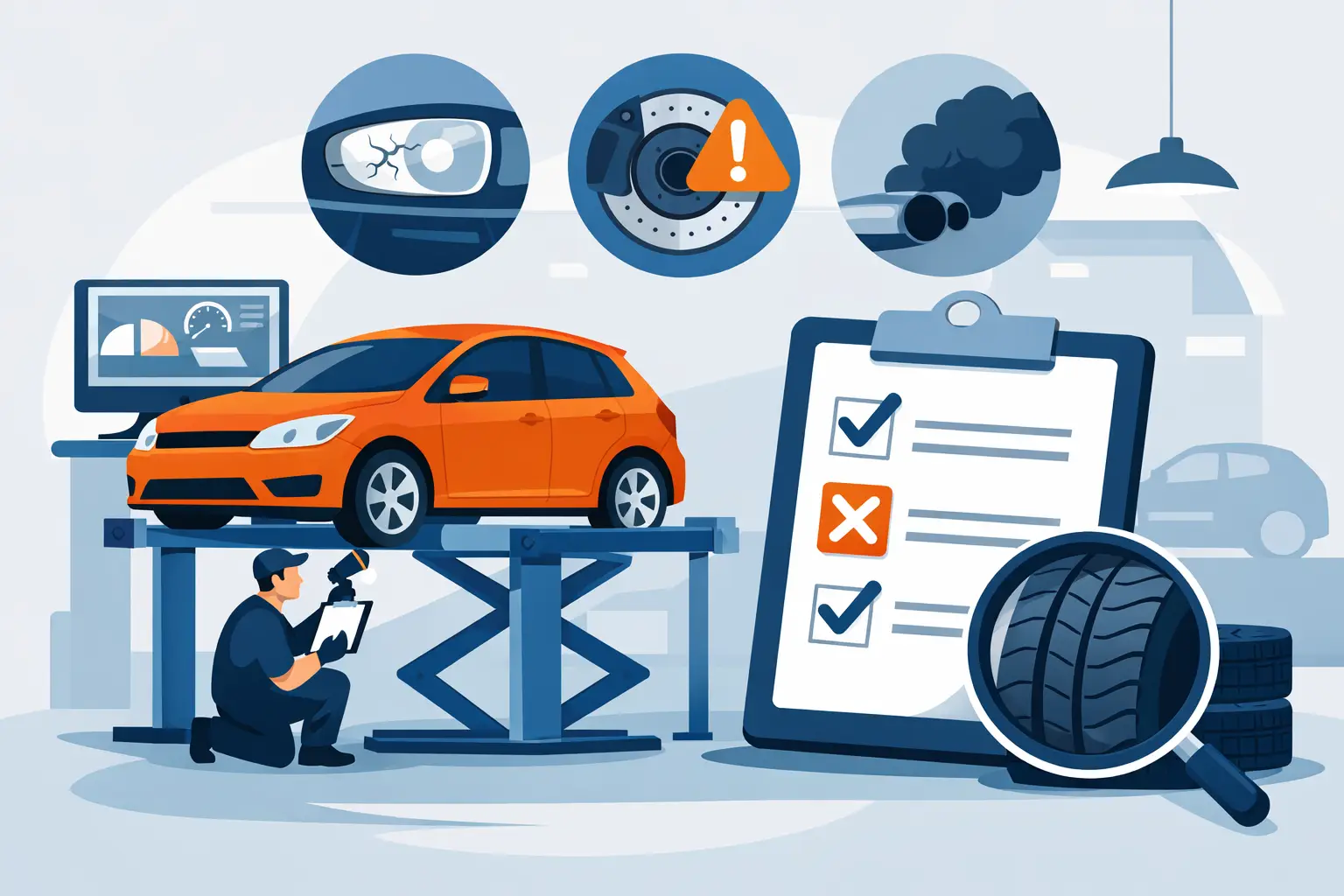
That sinking feeling usually starts before the keys even leave your hand. If you are wondering what fails an MOT test, the good news is that many failures are caused by faults that are simple, common and often preventable with a bit of checking beforehand.
An MOT is there to make sure your vehicle meets the minimum safety and environmental standards required on the road. It is not the same as a full service, and it does not mean every part of the car is in perfect condition. What it does do is pick up issues that could affect safety, emissions or legal roadworthiness. For most drivers, the biggest worry is not the test itself – it is the surprise repair bill that can follow.
What fails an MOT test?
Some MOT failures are more common than others, especially on cars used for daily school runs, commuting and short local trips. Wear and tear builds up gradually, and many faults do not feel dramatic from behind the wheel until they are serious enough to be flagged in the test.
The most frequent problem areas are lights, tyres, brakes, suspension, visibility and emissions. Registration plates, seatbelts, steering and the windscreen are also regular reasons for failure. In many cases, there is no major mechanical disaster behind it. It might simply be a blown bulb, a tyre worn just below the legal limit, or wiper blades that are no longer clearing the screen properly.
That is why a little preparation can go a long way. A quick check before your booking can sometimes save you from an avoidable fail.
The most common MOT failure points
Lights and electrical items
Lighting faults are among the most common reasons cars fail. That includes headlights, brake lights, indicators, rear lights, number plate lights and hazard warning lights. A bulb can fail without you noticing, especially if it is at the rear of the vehicle.
It is not only about whether the light comes on. Testers also look at condition and aim. If a headlamp is misaligned, too dim, damaged or showing the wrong colour, it could be marked as a defect. Dashboard warning lights can also matter. If a warning light for something important like airbags or ABS stays on, that may lead to a fail.
Tyres and wheels
Tyres are a big one because they directly affect braking, grip and control. The legal minimum tread depth in the UK is 1.6mm across the central three-quarters of the tyre, but waiting until you are right on that limit is not wise. Uneven wear, cuts, bulges, exposed cords or damage to the sidewall can all cause problems.
Testers will also look at whether the tyres are suitable and correctly fitted. Different tyre types on the same axle can be an issue in some cases. If a wheel is damaged or insecure, that can also lead to failure.
Brakes
Brakes are tested carefully for obvious reasons. If they are worn, imbalanced, binding or not working effectively enough, the vehicle may fail. Drivers do not always spot brake issues early, especially if the decline has been gradual.
Warning signs can include squealing, grinding, pulling to one side, a soft brake pedal or longer stopping distances. But sometimes there are no clear symptoms until the car is tested. Brake pads and discs are wear-and-tear items, so they are worth checking regularly rather than waiting for MOT time.
Suspension and steering
Suspension problems can creep in quietly. Worn shock absorbers, damaged springs and play in suspension joints are all common MOT issues. You might notice knocking over bumps, poor handling or uneven tyre wear, but not always.
Steering components are also inspected for wear or excessive play. If the steering does not feel quite right, feels loose, or the car wanders more than it used to, it is worth getting it looked at before the test.
Windscreen, wipers and visibility
Your view of the road matters just as much as the car’s mechanical condition. Chips and cracks in the windscreen can cause an MOT failure if they are in the driver’s line of sight or exceed the allowed size in a critical area.
Wipers must clear the screen effectively, and washers must work properly. If the blades smear rather than wipe, or the washer bottle is empty, that can become an issue. Mirrors also need to be secure and provide a proper view to the rear.
Emissions and exhaust
Emissions failures are often a concern for drivers, especially with older petrol and diesel vehicles. If the exhaust emissions are too high, or if there is smoke that exceeds the legal limit, the car may fail.
There can be several causes. It may be something relatively straightforward, like an engine not fully warmed up before the test, but it can also point to more involved issues such as a faulty sensor, exhaust leak, catalytic converter problem or diesel particulate filter trouble. If the engine management light is on, that can be a warning sign that the car needs attention before the MOT.
Seatbelts, doors and registration plates
These are the kinds of faults people often overlook. Seatbelts must work properly, lock as they should and be in good condition. Doors need to open and close securely from the relevant sides. Registration plates must be readable, properly fixed and in the correct format.
A cracked plate, faded lettering or a plate obscured by dirt can create unnecessary problems. It sounds minor, but the MOT is based on standards, and small issues still count.
What can fail an MOT straight away?
Some faults leave very little room for interpretation. Dangerous tyre damage, inoperative brake lights, severely worn brakes, major windscreen damage in the driver’s view, serious suspension defects and obvious steering issues can all result in an immediate fail.
There is also an important difference between minor, major and dangerous defects. A major defect means the car fails the MOT. A dangerous defect means it fails and should not be driven until repaired. That distinction matters, particularly if you were planning to drive away and sort it later.
What does not always fail an MOT?
This is where a bit of nuance helps. A car can pass an MOT and still need work. The test is not a complete health check. Items such as the clutch, gearbox condition and engine performance are not assessed in the same way as they would be during a full service or diagnostic inspection.
Cosmetic damage also does not automatically mean failure unless it affects safety. A small dent, worn upholstery or scuffed trim may look untidy but will not usually fail an MOT on their own. Equally, some issues may be recorded as advisories rather than failures. An advisory is essentially a warning that something is wearing out or may need attention soon.
That is why a pass certificate should never be taken as proof that nothing needs doing. It simply means the vehicle met the required standard at the time of the test.
How to reduce the chance of an MOT failure
If you want to avoid the most common reasons for what fails an MOT test, a simple pre-check makes a real difference. Check all exterior lights, inspect your tyres, top up screenwash and test the wipers. Make sure the horn works, the number plates are clean and readable, and there are no obvious warning lights showing on the dashboard.
It also helps to think about anything that has felt different while driving. A new noise, vibration, squeak or handling issue is worth taking seriously. Drivers often put these things off because the car still feels usable, but that is exactly how MOT surprises happen.
Regular servicing matters too. A serviced car is not guaranteed to pass, but it is far less likely to arrive at test time with neglected wear-and-tear items. If your MOT is due and you already know the brakes feel rough or the tyres are close to the limit, dealing with it beforehand is usually the cheaper and less stressful route.
When it is worth getting a garage to check first
If you are short on time, not confident around cars, or your vehicle is older, a pre-MOT check can be a sensible option. It gives you a clearer picture of anything obvious before the official test begins. That can be especially useful if you rely on the car every day and cannot afford the disruption of a fail.
A good local garage will explain what genuinely needs doing, what can wait, and what is simply advisory. That clarity matters. Most drivers are not looking for technical lectures – they just want straight answers, fair pricing and work that is actually necessary.
At Kingshill Autos, that is exactly how we believe it should be. No hidden extras, no scare tactics, just honest advice to help you keep your car safe, legal and ready for the road.
An MOT should not feel like a gamble. The more you understand what your tester is looking for, the easier it becomes to catch small issues before they turn into bigger ones.