A quick check in your driveway can tell you far more than whether your tyres look worn. Knowing how to check tyre tread depth helps you stay safer in wet weather, avoid an MOT failure and deal with tyre wear before it becomes an expensive problem.
Tyres are the only part of your car in contact with the road. Their tread channels water away from the contact patch, helping the vehicle brake, steer and stay stable when roads are wet. As tread gets lower, that grip reduces – often before a tyre looks obviously bald from a standing position.
What is the legal tyre tread depth in the UK?
For cars, vans and most light vehicles, the legal minimum tyre tread depth is 1.6mm. This must be present across the central three-quarters of the tyre’s width and around its full circumference.
Anything below that is illegal and unsafe. If you are stopped with illegal tyres, you could face a fine of up to £2,500 and three penalty points for each affected tyre. Your car is also likely to fail its MOT.
However, waiting until 1.6mm is not always the best plan. Many garages recommend replacing tyres at around 3mm, particularly if you do a lot of motorway driving, regularly carry family passengers or drive on rural Buckinghamshire roads in poor weather. Braking and wet-road performance can drop noticeably as tread wears below this point.
How to check tyre tread depth with a 20p coin
The 20p test is a simple, useful first check that most drivers can do in a minute or two. You only need a clean 20p coin and enough light to see the tyre clearly.
Park on level ground, apply the handbrake and turn the steering wheel so you can see the front tyre tread more easily. Place the 20p coin into one of the main grooves, with the outer rim of the coin facing down into the tread.
If the outer rim is hidden by the tread, the tyre is generally above the legal minimum. If you can see the rim clearly, the tread may be close to or below the legal limit, and the tyre should be checked properly as soon as possible.
Do not test just one point. Check at least three positions across the tyre – the inner edge, centre and outer edge – and repeat this in several places around its circumference. Uneven wear can mean one part of the tyre is legal while another is not.
The 20p test is convenient, but it is not a replacement for an accurate measurement. It gives a clear warning when a tyre is getting low, rather than an exact reading in millimetres.
Use a tread depth gauge for a more accurate reading
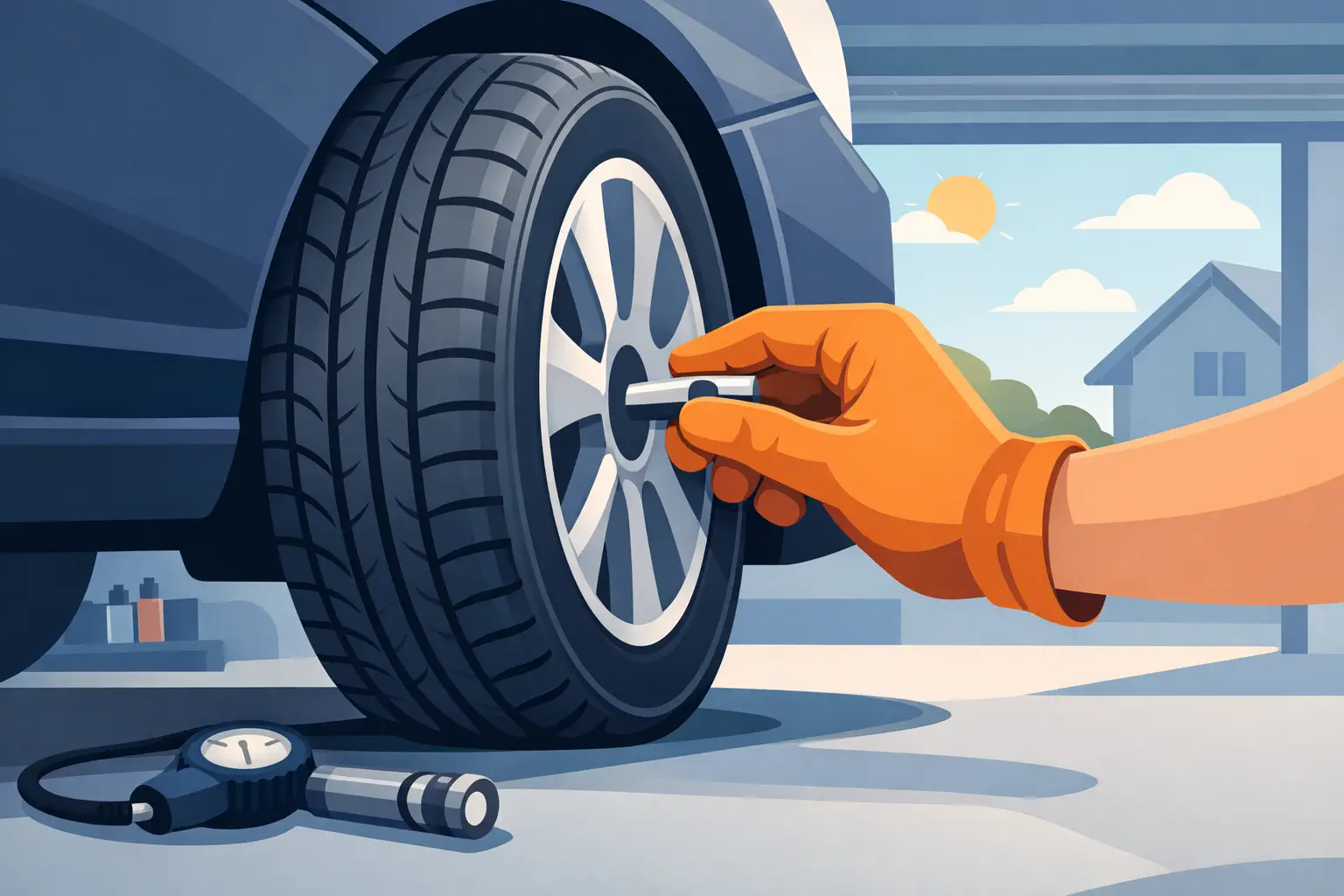
A tyre tread depth gauge is inexpensive, easy to use and gives a measurement in millimetres. Push the gauge’s probe into a main tread groove, rest its base flat against the tyre surface, then read the result.
Measure the same inner, centre and outer areas of every tyre. If one reading is much lower than the others, do not rely on the highest figure. The lowest reading is what matters for roadworthiness and safety.
If your tyres are at 3mm or below, it is sensible to start planning replacement rather than waiting for the next MOT. This gives you time to choose suitable tyres and avoid being caught out by a sudden puncture, an advisory becoming a failure, or poor grip in heavy rain.
Check the tyre wear indicators too
Most modern tyres have built-in tread wear indicators. These are small raised bars moulded across the grooves of the tyre. Look for a small triangle, the letters TWI or another marker on the tyre sidewall to help you find them.
When the surrounding tread is level with these bars, the tyre has reached approximately 1.6mm and needs replacing. Wear indicators are a useful back-up check, but they sit at the legal minimum. They should be treated as a clear signal to book tyre replacement, not as a comfortable amount of tread to keep using.
Uneven tyre wear can point to another problem
Tread depth is only part of the picture. A tyre can have plenty of tread in places but still be unsuitable for the road because it is wearing unevenly, damaged or ageing.
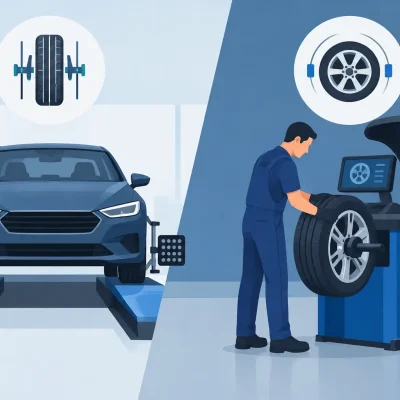
Wear concentrated in the centre of the tyre often suggests over-inflation. Wear on both outer edges can point to under-inflation. If one edge is wearing faster than the other, the cause may be wheel alignment, suspension wear or a steering issue. A patchy, scalloped pattern can also indicate a problem with wheel balancing or suspension components.
These patterns matter because fitting a new tyre without finding the underlying cause can mean the replacement wears out early too. A straightforward tyre check can therefore help prevent a bigger repair bill later.
Look closely for cuts, cracks, bulges, objects lodged in the tread and exposed cords. A bulge in the sidewall is particularly serious, as it can mean internal damage to the tyre structure. Do not attempt to drive on a tyre with a sidewall bulge – arrange for professional advice straight away.
Do not forget the rear tyres
Front tyres tend to wear more quickly on many cars because they handle much of the steering and braking. That does not mean the rear tyres can be ignored. Rear tyre grip is vital for stability, especially on wet bends and during emergency manoeuvres.
Check all four tyres, plus the spare if your vehicle has one. A spare can deteriorate with age even if it has never been used, so inspect it for cracking and make sure it is correctly inflated. If your car has a space-saver spare, remember that it is designed for temporary use and usually has a lower maximum speed.
It is also worth checking tyre pressures at the same time. Use the vehicle manufacturer’s recommended pressures, usually found inside the driver’s door frame, on the fuel filler flap or in the handbook. Check them when tyres are cold, ideally before a journey rather than after driving.
When should you check your tyre tread?
A monthly check is a sensible routine, and it only takes a few minutes once you know what you are looking for. Check before a long journey, before an MOT, after hitting a deep pothole or kerb, and whenever the car starts pulling to one side or feeling different through the steering.
You should also inspect tyres more often during autumn and winter. Wet leaves, standing water and darker evenings all make good tyre grip more valuable. The legal limit remains 1.6mm throughout the year, but the practical benefit of deeper tread is greatest when the weather is poor.
If you are unsure about what you have found, there is no need to guess. A garage can measure each tyre accurately, explain any uneven wear in plain language and advise whether replacement is needed now or can be planned for later.
A simple tyre check can save a difficult journey
Tyre condition is easy to overlook because wear happens gradually. Yet a 20p coin, a few minutes and a proper look across every tyre can reveal an issue before it affects your safety, MOT result or budget.
For drivers in High Wycombe, Kingshill Autos can check tyre condition as part of a wider vehicle inspection and explain the findings clearly, without pressure or hidden extras. If something does need attention, you will know what is wrong, why it matters and what your practical options are.