You usually notice brake trouble at the worst possible moment – approaching a roundabout, edging through traffic, or stopping on a wet school-run morning. The signs your brakes need replacing often start small, but they rarely stay that way for long. Catching them early can help you avoid bigger repair bills, failed MOTs, and most importantly, unsafe driving.
Brakes are one of those parts many drivers do not think about until something feels wrong. That is understandable. Modern braking systems are built to last, and wear happens gradually. The trouble is that gradual wear can make it easy to ignore the warning signs or put them down to road conditions, weather, or a one-off noise.
Common signs your brakes need replacing
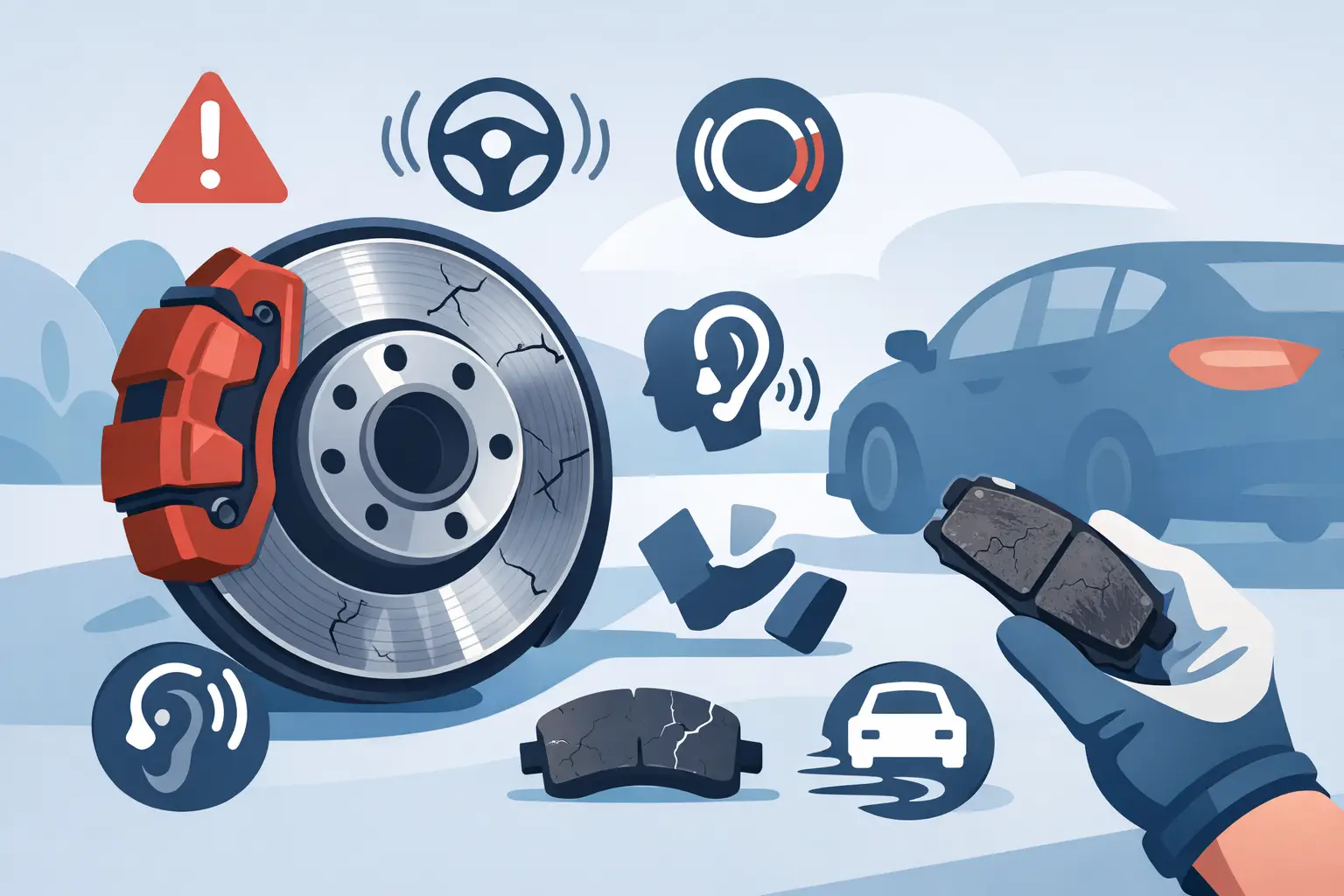
The clearest sign is often noise. If you hear a high-pitched squeal when you press the brake pedal, your brake pads may be worn down and starting to complain. Many pads are designed with a wear indicator that makes this sound on purpose. It is there to give you a warning before the braking material wears too low.
Grinding is more serious. If your brakes make a harsh grinding or scraping sound, the pads may already be worn through. At that point, metal can be rubbing against metal, which risks damaging the discs as well as the pads. That usually means a more expensive repair than if the issue had been dealt with earlier.
Another sign is a longer stopping distance. If your car does not feel as sharp or confident when slowing down, do not ignore it. Brakes should feel predictable. If you are pressing the pedal harder than usual or needing more road to stop safely, the system needs checking.
A brake pedal that feels different can also point to trouble. If the pedal feels soft, spongy, or sinks lower than normal, there could be worn components, air in the system, or a brake fluid issue. If the pedal feels unusually hard, that can also signal a fault. Either way, a change in pedal feel is worth taking seriously.
Vibration through the pedal or steering wheel when braking is another common warning. Sometimes that means your brake discs are worn unevenly or have become warped. It does not always mean everything needs replacing at once, but it does mean the brakes are not working as smoothly as they should.
Pulling to one side under braking is another red flag. If the car drifts left or right when you slow down, one side may be braking more strongly than the other. That can happen because of uneven pad wear, sticking calipers, or other issues in the braking system.
And then there is the dashboard warning light. A brake warning light should never be brushed aside. In some cases it can be something simple, such as low brake fluid or a sensor issue. In others, it may point to a genuine safety problem. If that light comes on and stays on, it is best to get the car inspected as soon as possible.
Not every brake symptom means the same thing
This is where it helps to avoid guessing. A squeal does not always mean full brake replacement is needed straight away. Some brakes squeak because of surface rust after rain, especially if the car has been parked overnight. Light rust often clears after a short drive and a few normal brake applications.
On the other hand, a persistent squeal that happens day after day is different. So is grinding, clunking, or a pedal that feels wrong every time you drive. Brake issues can overlap, and the same symptom can have more than one cause. That is why proper inspection matters.
Brake pads, discs, calipers, fluid, and sensors all work together. Sometimes only the pads need replacing. Sometimes worn pads have already damaged the discs too. In other cases, the fault may be linked to sticking parts or hydraulic problems rather than normal wear. It depends on how long the issue has been developing and how the vehicle has been driven.
How worn brakes tend to feel in everyday driving
Drivers often describe worn brakes as feeling less confident rather than obviously broken. The car still stops, but something feels off. Maybe the pedal needs more effort in traffic. Maybe the bite feels weaker on hills. Maybe there is a noise when parking that was not there a month ago.
That matters because brake wear is not always dramatic. You do not need to wait for a complete failure to know something is wrong. Small changes in sound, feel, or response are often the best early clues.
If you do a lot of stop-start driving, short urban journeys, or school-run mileage, your brakes may wear faster than someone mainly doing steady motorway trips. Vehicle size matters too. Heavier cars naturally put more load through the braking system. Driving style, load carried, and the quality of parts fitted all play a part.
When to stop driving and get the car checked
Some brake problems can wait a day or two for a booked inspection. Others should not.
If you hear grinding, notice a major loss of braking performance, feel the pedal sinking, or see a brake warning light alongside poor stopping, it is wise not to keep driving unless absolutely necessary. The same goes for severe pulling under braking or any feeling that the car is unsafe to control.
If the symptom is milder – such as occasional squeaking or a slight vibration – you may still be able to drive cautiously to a garage, but it should not be left for weeks. Brake faults nearly always get more expensive the longer they are ignored.
Can worn brakes cause an MOT failure?
Yes, they can. Brakes are a key part of the MOT because they are fundamental to road safety. Excessively worn pads or discs, contaminated brake components, warning lights, poor braking performance, and certain hydraulic faults can all lead to failure.
That said, not every brake concern will automatically fail an MOT on the spot. Some issues may be picked up as advisories before they become serious enough to fail. That is one reason routine servicing is so useful. It gives you a chance to catch wear early instead of discovering it on test day.
Why prompt brake repairs usually save money
A lot of drivers understandably worry that taking a car in early will lead to being talked into extra work. But with brakes, delay is often what increases the bill.
Replacing worn pads at the right time is usually straightforward. Leaving them until they grind into the discs can mean replacing both. If damaged discs then affect other components, the cost rises again. What starts as normal wear can turn into a more involved repair simply because the warning signs were ignored.
This is where a clear inspection and honest explanation matter. A good local garage should tell you what is worn, what needs doing now, and what may need watching later. You should not be left guessing, and you should not feel pressured into work that is not necessary.
What happens during a brake inspection
If you book your car in because you suspect brake trouble, the technician will normally check the condition of the pads and discs, inspect for uneven wear, assess calipers and related parts, and look at the brake fluid and any warning lights or stored faults.
They will also want to know what you have noticed. Was the noise only when braking? Did it happen after rain? Is the pedal different all the time or only on longer journeys? Those details can help narrow things down quickly.
At Kingshill Autos, that sort of straightforward approach is exactly what local drivers tend to value most – clear advice, fair pricing, and no unnecessary jargon.
How to reduce brake wear
You cannot avoid brake wear altogether, but you can slow it down. Leaving a bit more space in traffic helps reduce heavy braking. Anticipating junctions and slowing smoothly is gentler on the system than braking late and hard. Keeping up with servicing matters too, because worn parts are easier to deal with before they start affecting other components.
Still, even well-driven cars need brakes replacing eventually. Pads and discs are wear-and-tear items. The key is not to see replacement as a surprise, but as normal maintenance that keeps your car safe and dependable.
If your car is squealing, grinding, pulling to one side, or simply not stopping as confidently as it should, trust that instinct and get it checked. Brakes are not something to keep putting off, and a simple inspection today can spare you a far more stressful problem tomorrow.