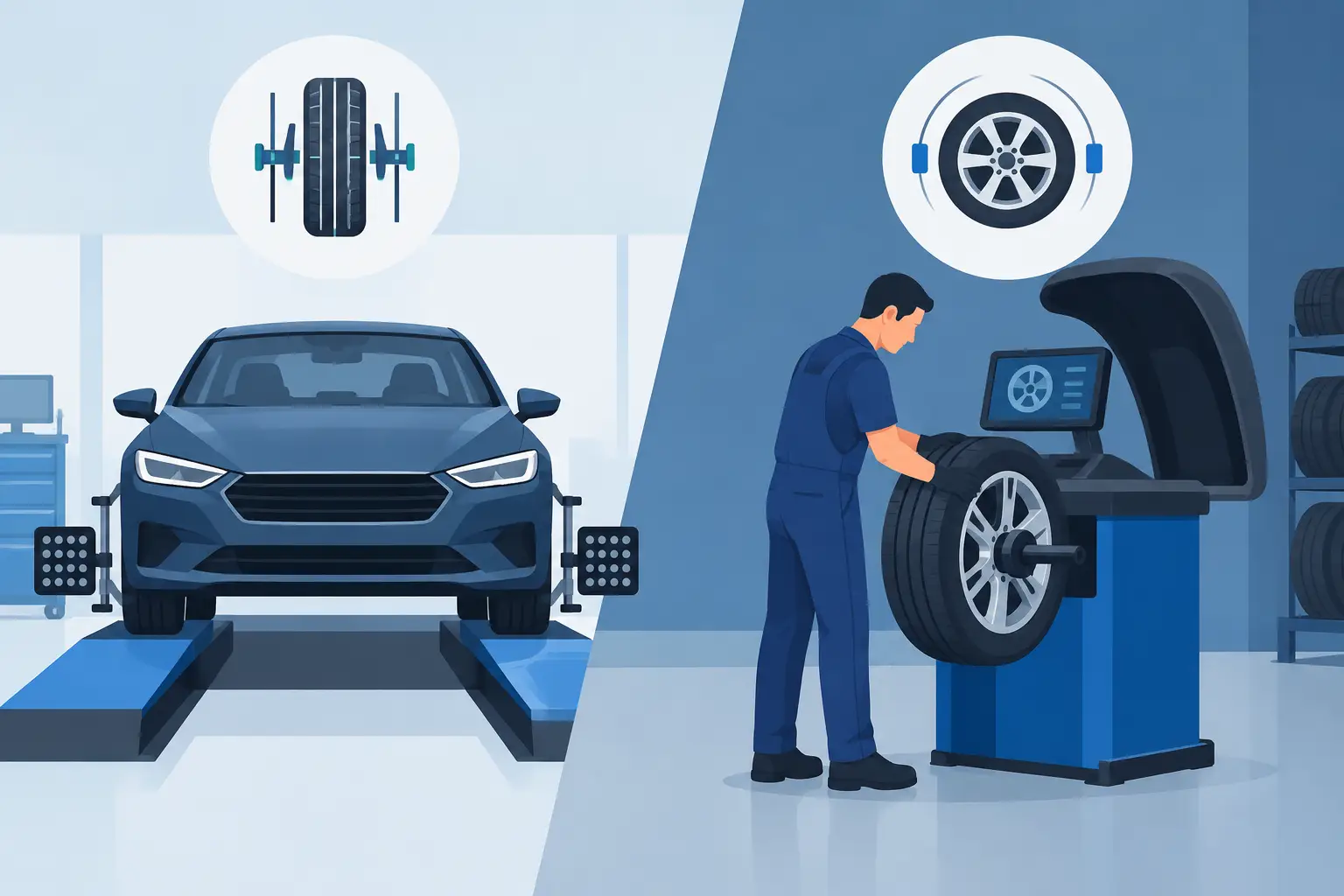
A steering wheel that pulls to one side and a vibration through the seat may both seem like tyre problems, but they usually point to different jobs. Understanding wheel alignment versus wheel balancing can save you from uneven tyre wear, an uncomfortable drive and paying for work that does not address the real cause.
They are often mentioned together because both affect how your car feels on the road. However, wheel alignment concerns the direction your wheels point, while wheel balancing concerns how evenly each wheel rotates. A good garage will check the symptoms and explain which service is needed, rather than treating them as the same thing.
Wheel alignment versus wheel balancing: the key difference
Wheel alignment is the adjustment of the angles of the wheels so they sit correctly in relation to the road and the vehicle. It is sometimes called tracking, although tracking is only one part of the wider alignment setting. The aim is to make sure the tyres meet the road evenly and the car travels straight when you are driving on a level road.
Wheel balancing is different. It involves fitting small weights to the wheel rim to make the tyre and wheel assembly spin evenly. Even a small imbalance can become noticeable at speed, because the wheel is rotating many times every second.
Think of alignment as where the wheels are pointing, and balancing as how smoothly they turn. One does not automatically fix the other.
Signs your car may need wheel alignment
The most common sign of poor alignment is a car that drifts or pulls left or right when you briefly relax your grip on a flat, straight road. Road camber can cause a slight movement, so it is not always an immediate fault. A persistent pull, however, is worth checking.
You may also notice that the steering wheel is no longer centred when travelling straight ahead. More importantly, look at your tyres. Alignment problems often wear one edge of a tyre much faster than the other. This can shorten tyre life considerably and may leave you replacing tyres earlier than expected.
Alignment can be knocked out by everyday driving. Potholes, kerbs, speed bumps taken too quickly and worn steering or suspension components can all affect it. A sudden change after hitting a pothole is a particularly good reason to have the vehicle inspected, especially if the steering feels different afterwards.
Poor alignment is not just about annoyance at the wheel. It can make the car less predictable in wet conditions, increase rolling resistance and add strain to tyres and suspension parts.
What happens during an alignment check?
A technician measures the wheel angles against the manufacturer’s specifications, then adjusts the relevant settings where adjustment is available. Before making changes, they may need to identify worn or damaged suspension and steering parts. There is little point setting the alignment precisely if a worn component will allow it to move again.
Not every vehicle has adjustment for every angle, and the right approach depends on its design and condition. That is why an honest inspection matters more than a quick promise to make the steering wheel look straight.
Signs your wheels need balancing
Wheel balancing usually announces itself as a vibration rather than a pulling sensation. You may feel it through the steering wheel, often at motorway speeds, or through the seat and floor if an imbalance is at the rear of the vehicle.
The vibration can appear within a certain speed range, then lessen or change as you drive faster or slower. That pattern is a useful clue, but it is not a diagnosis on its own. Tyre damage, worn suspension components and brake issues can also cause vibration, so the car should be checked properly.
Balancing is commonly needed when new tyres are fitted, after a puncture repair or if a balance weight has fallen off. Mud, stones or ice packed inside a wheel can also create an imbalance. If you spot a missing weight or have recently struck a kerb, it is sensible to arrange a check.
What happens during wheel balancing?
The wheel is removed and placed on a balancing machine, which identifies where the weight is unevenly distributed. The technician then fits the correct small weights to counter it. Once done correctly, the wheel should rotate smoothly.
Balancing is usually a straightforward job, but it cannot repair a tyre with a bulge, damaged internal structure or an out-of-round wheel. If the machine or inspection shows a more serious issue, you should be told clearly what has been found and why any further work is recommended.
Do you need alignment, balancing or both?
It depends on the symptoms and what has happened to the car. If it pulls to one side, has an off-centre steering wheel or shows edge wear on the tyres, alignment is the more likely requirement. If the main problem is vibration at speed, balancing is more likely.
Sometimes both are needed. For example, after fitting new tyres, the wheels should be balanced as part of the fitting process. If the old tyres show uneven wear or the car has hit a major pothole, checking the alignment at the same time is sensible.
It is also possible for neither to be the answer. A vibration when braking may be related to brake discs or other braking components. A pull under braking could suggest a brake fault. A car that wanders may have worn suspension bushes, ball joints or tyres with incorrect pressures. This is why accurate diagnosis is better value than guessing.
How tyre wear helps tell the story
Your tyres can reveal a great deal about the condition of the vehicle. Wear concentrated on the inner or outer edge often suggests an alignment issue. A patchy, scalloped or cupped pattern can be linked to wheel balance, suspension wear or problems with tyre pressure.
Check your tyres regularly, including the inner edges where wear can be easy to miss. The legal minimum tread depth in the UK is 1.6mm across the central three-quarters of the tyre, around its full circumference, but waiting until the legal limit is rarely the best plan. Grip in wet weather reduces as tread gets low.
Correct tyre pressures matter too. Underinflation and overinflation can both cause uneven wear and make a vehicle feel less settled. Use the pressure recommended for your car and load, rather than relying on the number printed on the tyre sidewall.
Is wheel alignment checked during an MOT?
An MOT does not normally include a full wheel alignment measurement or wheel balancing test. The tester will inspect tyres, steering and suspension components as part of the test, and may identify faults that affect roadworthiness. However, a vehicle can pass its MOT while still having alignment slightly out of specification or a vibration caused by an imbalance.
That makes routine servicing and tyre checks useful companions to the annual MOT. If a technician sees unusual tyre wear during an inspection, they can advise whether an alignment check is worthwhile before the problem becomes more expensive.
When should you book a check?
Book sooner rather than later if your car has started pulling, vibrating at speed, wearing tyres unevenly or feeling unsettled after a pothole or kerb strike. You do not need to know the technical answer before contacting a garage – clear symptoms are enough to start with.
At Kingshill Autos, we can inspect the tyres, steering and suspension and explain the likely cause in plain language. If alignment or balancing is appropriate, you will know why. If another fault is responsible, you will not be left paying for the wrong service.
A smooth, straight-driving car is easier to live with and kinder to its tyres. If something feels different behind the wheel, trust that feeling and get it checked while it is still a small concern.